Cart is empty

02/05/2026
The average American household now spends $170 per week on groceries, up from $120 just six years ago. With food prices climbing 2.3% in 2025 alone, every dollar in your grocery budget carries more weight than it used to. And that rising pressure has more people asking a deceptively simple question: Should I be shopping at my local food market instead? It's a question that draws strong opinions on both sides. Advocates for local food markets paint them as fresher, healthier, and community-building. Defenders of conventional grocery stores point to convenience, consistency, and lower sticker prices. The truth sits somewhere more nuanced than either camp usually admits.
Where Local Markets Win on Price
When you compare apples to apples, several staple categories are consistently cheaper at farmers' markets. Eggs are a prime example. Organic, pasture-raised eggs at a grocery store can easily run $8 to $9 a dozen in 2026. At many farmers' markets, the same quality eggs sell for $6 to $7. Fresh herbs are another standout. Grocery stores charge around $3 for a tiny plastic clamshell of thyme or basil, while farmers' market vendors sell substantially larger bundles for the same price or less.
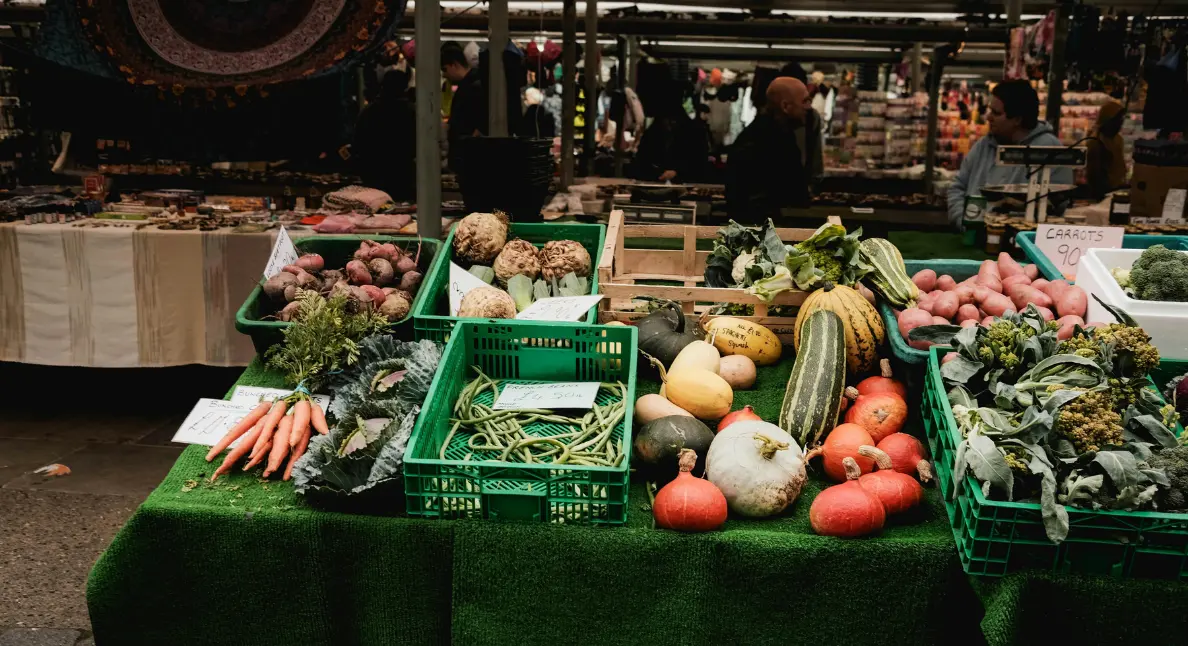
Seasonal produce in particular offers real savings at local markets. When a farmer has an abundant crop of zucchini, tomatoes, or peppers, prices drop because they need to move product before it spoils. There's no corporate pricing structure, maintaining an artificial floor. Bell peppers, leafy greens, onions, and squash routinely undercut supermarket prices during peak season.
Grocery stores have genuine structural advantages when it comes to processed foods, pantry staples, and out-of-season produce. Their massive supply chains and purchasing power let them negotiate bulk pricing that a small farm simply cannot match. If you're buying canned goods, cereal, cooking oils, or frozen items, the supermarket will almost always be cheaper. Stock your pantry and freezer at the grocery store. That hybrid approach, which platforms like Local Cart are making easier by connecting consumers with local producers online, gives you the best of both worlds without blowing your budget.
Freshness and Nutrition: What the Science Actually Shows
Most produce at a conventional grocery store was harvested five to seven days before it hits the shelf. It then sits on display for another three to four days. During that transit and storage window, nutrient degradation is significant. Antioxidants like vitamin C, folate, and carotenes decline rapidly after harvest. A vegetable that spent a week in a refrigerated truck is measurably less nutritious than one picked yesterday.
Farmers' market produce, by contrast, is typically harvested within 24 hours of sale, often the morning of market day. The produce has had time to ripen fully on the plant, which means more developed flavor compounds and higher nutrient density. Grocery store produce is frequently picked before full ripeness so it can survive transportation without spoiling, and then it may be treated with chemical ripening agents to simulate the appearance of maturity.
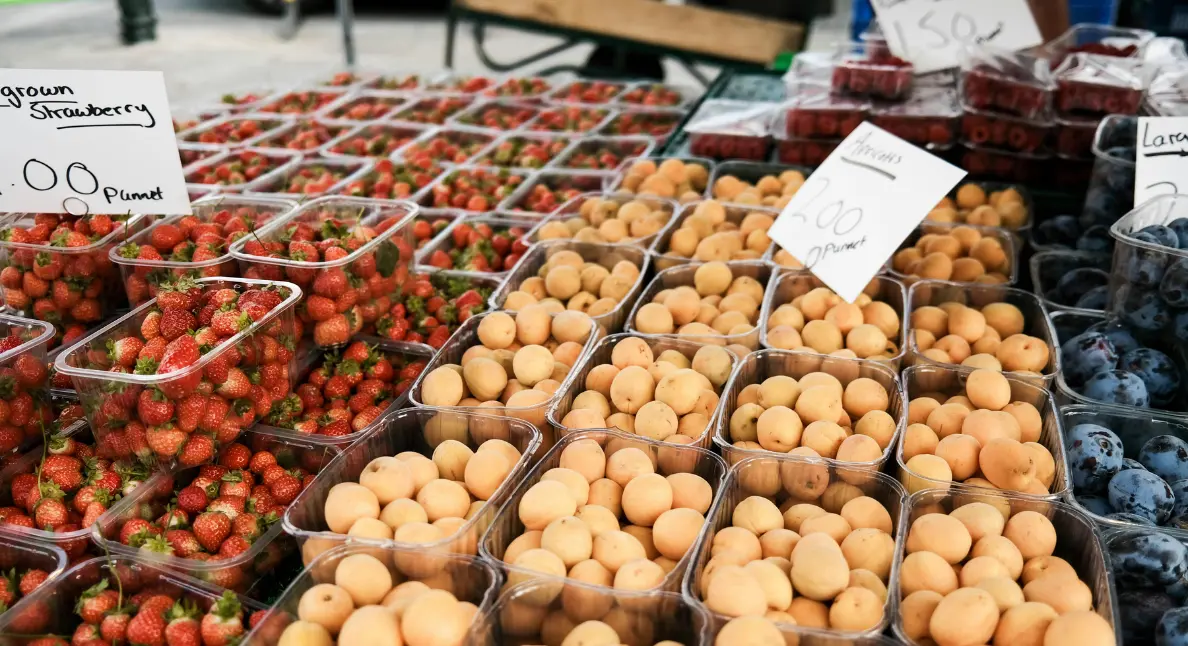
The benefits compound when you eat seasonally. Broccoli grown during its natural fall/winter season contains nearly twice the vitamin C of broccoli grown in spring. Winter greens like kale, Brussels sprouts, and cauliflower peak in immune-supporting vitamin C content right when cold and flu season arrives. Summer stone fruits deliver extra beta-carotenes during the months when sun exposure is highest.
This is one area where local food markets have a structural advantage: they're inherently seasonal. You buy what's growing now, in your region, at peak nutrition. The grocery store, by design, stocks everything year-round, which often means produce grown in heated greenhouses or shipped from the opposite hemisphere. Fresher produce tastes better and contains fewer preservatives and chemical ripening agents. Whether that translates to clinically significant health differences over a lifetime is a question researchers are still working to answer definitively.
The Environmental Footprint: It's Not Just About Food Miles
If you've ever heard someone justify local food shopping purely on environmental grounds, the picture is more complex than the bumper sticker suggests. A landmark study found that food transportation accounts for roughly 19% of total food-system emissions, substantially higher than previous estimates. For fruits and vegetables specifically, transportation generates nearly 36% of their total emissions. That seems like a strong case for buying local.
What Your Dollar Does After You Spend It
When you spend $50 at a national grocery chain, the economics of that transaction are straightforward: a fraction goes to the farmer, another fraction to the distributor, another to the retailer's corporate operations, and a significant share leaves your local economy entirely. The supply chain is long, and the money disperses across it.
When you spend $50 at a farmers' market, substantially more of that money stays in your community. The farmer receives a far larger share of the retail price because there's no distributor, no regional warehouse, and no corporate margin to satisfy. Direct-market farms, those selling at farmers' markets, roadside stands, and through community-supported agriculture (CSA) programs, retain significantly more revenue per dollar of sales than farms selling through conventional wholesale channels.
The Multiplier Effect
Local spending creates what economists call a multiplier effect. Dollars spent with local producers get re-spent locally. The USDA's Gus Schumacher Nutrition Incentive Program alone has generated over $107 million in economic benefit for surrounding local economies, demonstrating how local food investment ripples outward.
Direct marketing is particularly important for small and beginning farmers, who are more likely to show consistent profitability when selling through local channels. These aren't boutique hobby farms. They're the farms that maintain agricultural land use, preserve rural employment, and keep farming viable as a profession in regions where consolidation would otherwise eliminate it.
Organic food store platforms extend this principle beyond market day. By connecting consumers with local producers, farmers, and artisans online, they make it possible to support the local food economy without being limited to Saturday morning market hours. Every purchase through a platform like that flows directly to the producers who are the backbone of your community's food system.
The Intangible Value
There's also a relational dimension that doesn't appear on any receipt. At a local food market, you can ask the farmer what spray they used (or didn't), how the chickens were raised, or why the tomatoes look different this week. That transparency builds trust in a way that an ingredient label on a cellophane-wrapped package never will.
The Convenience Trade-Off
The growth of online local food platforms means you're no longer limited to physically showing up at a market between 8 and noon on Saturday. Services that aggregate local producers remove one of the biggest barriers to local food shopping. CSA (Community Supported Agriculture) programs offer another model: pay upfront for a season's share, and receive a weekly or biweekly box of whatever the farm is producing. It requires some flexibility in meal planning, but it eliminates the shopping trip entirely. Even within traditional markets, many now accept SNAP benefits and offer matching programs like Double Up Food Bucks. These programs, operating in over 240 locations in Michigan alone, match every SNAP dollar spent on produce, doubling a family's fresh produce budget. Similar programs run in New York, Oregon, Indiana, and dozens of other states.
Who Really Benefits From the Local Food Economy
Food Access and Equity
The local food economy is often framed as a lifestyle choice for affluent shoppers, but the data tells a more complex story. Beyond boutique farmers’ markets and artisanal branding, local food systems are increasingly structured to address systemic gaps in access, affordability, and public health. When paired with policy tools and incentive programs, local markets can serve as economic and nutritional lifelines for communities historically excluded from access to fresh food.
- Expanding Access in Food Deserts: In many underserved neighborhoods, full-service grocery stores are scarce, and residents rely on convenience stores with limited fresh options. Local farmers’ markets strategically placed in these areas function as direct interventions in food deserts. When markets operate in low-income communities and are paired with financial incentives, fruit and vegetable intake increased by 1.6 servings per day among participating shoppers. That shift represents measurable progress in communities disproportionately affected by diet-related chronic illnesses. Improved access translates into tangible public health gains.
- Strengthening Local Economies: Farmers hire local labor, purchase regional supplies, and reinvest earnings nearby. This multiplier effect supports small-scale producers while generating secondary economic activity in transportation, packaging, and market operations. For rural and peri-urban communities, this can stabilize farm income and preserve agricultural land. For urban neighborhoods, it creates micro-economies centered around market days. The beneficiaries extend beyond shoppers to include farmworkers, small business owners, and service providers embedded in the regional economy.
- Improving Long-Term Health Outcomes: Communities facing high rates of diabetes, hypertension, and obesity often overlap with areas lacking reliable fresh food access. By lowering financial and geographic barriers, local food systems contribute to preventive health at the population level. Over time, improved dietary patterns can reduce healthcare costs, improve productivity, and enhance quality of life. While no single intervention solves structural inequities, local food markets paired with incentives represent a scalable model. The benefits compound across generations through better nutrition habits and reduced disease burden.
The local food economy is about restructuring access, affordability, and opportunity. When markets operate intentionally in underserved areas and are supported by public policy, the impact reaches far beyond weekend shoppers. The true beneficiaries are those who have historically had the least access to fresh, nutritious food.
The Farmer's Perspective
For producers, local markets represent autonomy. Rather than accepting wholesale prices dictated by massive buyers, farmers who sell direct set their own prices, build their own customer relationships, and keep more of every dollar. Farms participating in direct marketing channels are more likely to remain profitable year over year. Agricultural land that stays in production supports biodiversity, manages water runoff, and maintains open space. When local food markets keep small farms economically viable, they're quietly performing a land-use function that has broader community value.
If maximum freshness, nutrient density, and community economic impact matter most to you, local food markets deliver in ways that grocery stores structurally cannot. If year-round convenience, one-stop shopping, and consistent low prices on packaged goods are your priority, the grocery store remains hard to beat. The most practical approach for most households is a deliberate hybrid. Use local markets for seasonal produce, eggs, herbs, dairy, and meats where freshness and quality differences are most pronounced. Use your grocery store for pantry staples, frozen goods, and off-season items where the supply chain advantages are real. And if the Saturday morning market doesn't work for your schedule, look into CSA subscriptions or local food delivery services that bring the farmer-to-consumer model to your doorstep. The $170-per-week grocery budget isn't getting smaller anytime soon. How you allocate it, and who benefits when you do, is a choice worth making intentionally.
Sources:
- USDA Economic Research Service — Food Price Outlook: Summary Findings
- U.S. Bureau of Labor Statistics — Consumer Price Index: 2025 in Review
- Journal of Food Distribution Research — "Is Local Produce Really More Expensive?"
- Clemson University Home & Garden Information Center — The Benefits of Seasonal Eating
- PMC / National Institutes of Health — Farmers' Market Shopping and Dietary Behaviours Among SNAP Participants
- PMC / National Institutes of Health — Comparison of Fruit and Vegetable Prices: Farmers' Markets and Supermarkets
- Nature Food — Global Food-Miles Account for Nearly 20% of Total Food-Systems Emissions
- Environmental Science & Technology — Food-Miles and the Relative Climate Impacts of Food Choices in the United States
- USDA Economic Research Service — Local Foods
- USDA Agricultural Marketing Service — The Economics of Local Food Systems Toolkit
- USDA NIFA — Local and Regional Food Systems
- Rutgers NJAES — Eating Seasonally (FS1179)
- County Health Rankings & Roadmaps — Farmers Markets
- Frontiers in Sustainable Food Systems — "Where Everybody Knows Your Name": How Regulars at Farmers' Markets Differ
- Double Up Food Bucks — How Double Up Works
- Consumer Reports — Most and Least Expensive Supermarkets
- NC State Extension — Local Food Systems: Clarifying Current Research
About Us
Local Cart is an easy and convenient platform where local food and beverage entrepreneurs can meet and serve their customers in this new Covid-19 world. We help them more quickly pivot their business from the traditional dine-in or walk-in to a pick-up and/or delivery model. We preserve communities by keeping alive the mom & pop shops they have come to love and depend on for their sense of place.
