Cart is empty

10/13/2025
Buying from local farmers, artisans, and independent shops has become a popular way for consumers to shop more ethically and sustainably. The idea of buying local carries the promise of fresher products, stronger communities, and reduced environmental impact. However, just because something is locally made or grown does not automatically make it the superior choice in every respect. While over 90% of people believe shopping local benefits their community, about two-thirds of consumers admit they can’t do it as often as they’d like. There are situations when “buying local” might not live up to the hype, and understanding these nuances is key to making smart purchasing decisions. This article explores the advantages of buying local and the scenarios where local doesn’t necessarily mean better, so you can make informed tradeoffs as a consumer.
Supporting the Local Economy
One of the most cited economic benefits of shopping locally is that more of your money stays within the community. When you spend money at a neighborhood bookstore, family-run café, or farmers’ market, a larger portion of that revenue recirculates locally. For every $100 spent at a local business, about $68 stays in the local economy. By buying from local businesses and small businesses, you are essentially investing in your own town’s well-being. This can translate to more jobs and better infrastructure over time, as your dollars help local enterprises grow and hire.
Local entrepreneurs are also important job creators. Small businesses collectively employ a significant share of the workforce, and they often offer more jobs per dollar of revenue than large corporations. Local retailers might hire more staff per $1 million in sales compared to an online megastore, simply because their business model is more service-oriented and community-focused. These businesses tend to pay back into the community in other ways, too. All of that creates a “multiplier effect” where each dollar spent locally can generate additional economic activity nearby. Moreover, local businesses often offer better wages and working conditions than some big-box retailers. Hiring is also frequently done locally, so residents can find jobs close to home without long commutes. Altogether, choosing to buy local goods helps create a virtuous cycle of economic growth at the community level.

Strengthening Community Connections
Beyond the direct dollars, community-based shopping brings social benefits that strengthen the fabric of a neighborhood. Small local shops and markets become gathering places. These day-to-day interactions build relationships and trust among community members. A tight-knit community where people know each other is often safer and more resilient. It’s common to see local business owners sponsoring Little League teams, organizing street fairs, or donating to school fundraisers. They have a personal stake in the community’s success and often give back in ways large corporations do not. Equally, local shops give a town its distinctive character. Compare a main street filled with quirky independent stores to a strip of look-alike big-box retailers. This unique local flavor can instill community pride and make your area a more vibrant place to live.
The presence of vibrant local businesses can even influence lifestyle and health. When shops, cafes, and services are nearby, people tend to walk or bike more and drive less. Residents in neighborhoods with a high density of local businesses logged about 26% fewer automobile miles compared to those in areas with few local stores. Areas with more local shops also had better health outcomes on average, possibly thanks to reduced pollution and more active lifestyles.
Having a strong base of local businesses isn’t just a feel-good bonus. It can tangibly improve the quality of life. While local supply chains are not inherently invulnerable, they do give communities additional options and a sense of security in uncertain times. The benefits of shopping local clearly extend well beyond economics, enriching social connections and community well-being.
Fresher Produce and Better Quality Goods
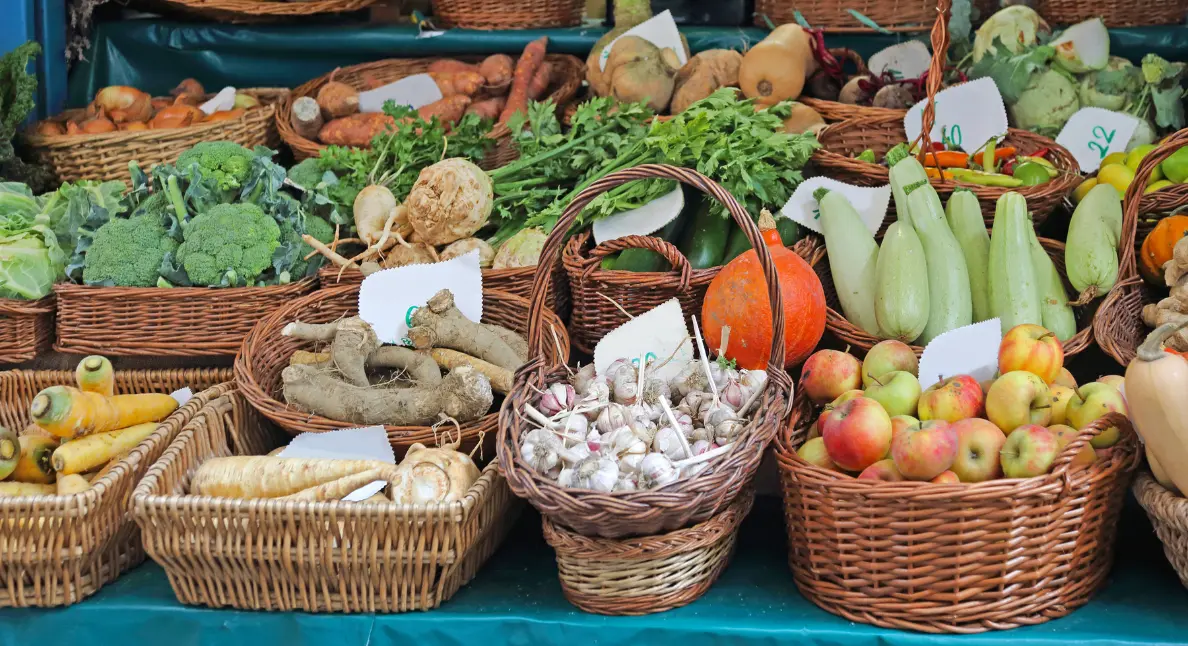
One of the major benefits of buying local is the potential for higher quality, especially when it comes to food. Locally grown fruits, vegetables, dairy, and meats typically reach the consumer much sooner after harvest or production than goods shipped over long distances. Because there’s a shorter time between farm and table, produce hasn’t been sitting in distribution centers or on trucks for weeks. In fact, fruits and vegetables can begin to lose their nutrients within just 24 hours of being picked, so the faster they get to your plate, the more nutritious they tend to be. This means one of the key local produce benefits is that you often get food that is fresher, more nutrient-dense, and full of flavor.
Beyond nutrition and taste, buying locally can also give you more transparency and trust in the quality of goods. When you purchase at a farm stand or local artisan shop, you can usually talk directly to the producer or grower. You can ask the farmer how the lettuce was grown or ask the baker which ingredients they use in their bread. This direct connection offers reassurance about what you’re getting. These are the advantages of shopping locally that big-box retailers or imported products typically can’t provide. Fewer middlemen and shorter supply chains mean there are fewer points where something can go wrong, potentially making local foods safer in some cases.
For non-food items, local craftspeople and artisans often put special care into their work, resulting in unique, well-made products. A locally crafted piece of furniture or jewelry isn’t mass-produced. It might even be custom-made for you, with an attention to detail that large manufacturers can’t match. Local markets also introduce consumers to products they might not find elsewhere. Smaller growers often offer heirloom produce or specialty varieties that never make it to supermarket shelves, and local makers experiment with one-of-a-kind goods. This adds variety and character to your shopping options. The quality advantages are a strong driver for people to purchase locally whenever feasible.
Environmental Factors: Local Food Sourcing vs. Global Supply Chains
A common motivation for local food sourcing is the belief that it cuts down on pollution and carbon emissions. If your food travels 20 miles instead of 2,000, that’s a lot of fuel saved. Local purchases can also involve less packaging and refrigeration since they don’t need to endure long transit. However, the environmental equation is more complicated than just distance traveled. Transportation is only one part of a product’s overall carbon footprint, and often a relatively small part.
Buying local can encourage sustainable farming practices if consumers demand organically grown or low-impact methods from nearby farms. It also helps preserve green space and farmland in your area. When local farmers stay in business, their land is less likely to be sold off for development, which maintains open space and biodiversity. Shorter supply chains mean less need for things like excessive plastic packaging or chemical preservatives that are often used to keep food fresh during long transport. These are real shopping local benefits for the environment and public health.
It’s also worth noting how the mode of transport matters. Goods shipped in large quantities by boat or rail are extremely efficient per item, so importing some products may be less carbon-intensive than it appears. By contrast, a local product that still requires a long truck drive or individual car trips to deliver or purchase might have hidden emissions. The most enormous red flag is air-freighted food. Fortunately, only a tiny fraction of food is air-shipped, and those tend to be luxury or off-season products. If you’re aiming to eat sustainably, it can be more impactful to avoid air-freighted specialties than to focus solely on local vs. non-local. The environmental impact of local buying depends on the specifics: sometimes local wins out, but other times a well-managed global supply chain is actually more efficient.
When Buying Local May Not Be Better
There are scenarios when “local” isn’t automatically the superior choice. Here are a few situations where buying local might not mean buying better:
- Out-of-Season and Energy-Intensive Production: Local isn’t always environmentally friendly if it means producing goods inefficiently. For instance, growing certain fruits or vegetables in a local greenhouse during winter might use far more energy than importing them from a region where they’re naturally in season.
- Limited Variety and Availability: Depending on where you live, not everything you want or need is available locally. Certain foods simply don’t grow in many climates, so they must be imported if you want them. If you insist on only buying local, you might be restricting yourself to a very limited diet or missing out on products that aren’t produced nearby.
The advantages of shopping locally come with caveats. There are times when global sourcing or larger-scale production can be more efficient or even more sustainable. A balanced perspective recognizes that both local and non-local goods have their place depending on the context.
How to Make Informed Tradeoffs as a Consumer
How can you decide when to purchase locally and when another option makes more sense? The answer will depend on your personal priorities and the specific situation. Here are some tips to help you make informed shopping decisions that fit your values and needs:
- Identify Your Priorities: First, be clear on what matters most to you for a given purchase. Is it reducing your carbon footprint, supporting your community, getting the best price, or obtaining the highest quality? For example, if cutting emissions is your top concern, remember that what you buy might matter more than where it comes from. If community support is your main priority, you might choose to buy local goods even if they cost a bit more or have a slightly higher footprint, because the social benefits are worth it to you.
- Research the Product’s Journey: Not all products labeled “local” are created equal, and not all imported products are bad. Try to learn about how the item was produced and transported. If it’s food, was it grown in season and without excessive chemical inputs? If it’s a locally made craft, where do the raw materials come from? Sometimes a product shipped from afar is produced in a highly sustainable or ethical way, while a local producer might use unsustainable practices. Understanding these details helps you weigh the tradeoffs beyond just the distance on the label.
- Consider the Whole “Cost”: When comparing local and non-local options, factor in all the costs and benefits, not just the price tag on the shelf. Maybe imported strawberries are cheaper in winter, but they won’t taste as good, and they traveled thousands of miles to reach you. The local strawberries in summer might be a bit more expensive than the grocery store’s, but they’re bursting with flavor, and your money spent on them supports a nearby farm. In many cases, the advantages of buying local are worth the extra dollar or two. Other times, it might not be worth it to you.
- Mix and Match Your Approach: You don’t have to take an all-or-nothing stance. A sensible strategy for many people is to enjoy the best of both worlds. Buy local where it makes a noticeable positive difference, and take advantage of global or non-local sources where they excel. You might get your produce, bread, and meat from local farmers and bakeries, but purchase pantry staples or out-of-season fruits from a larger grocer that imports goods.
- Use Tools to Support Local Shopping Conveniently: One challenge with relying exclusively on local shopping is that it can be less convenient. However, technology is helping bridge this gap. Many communities now have online farmers’ market platforms or directories of local businesses. LocalCart.net lets you browse and buy from various neighborhood shops through one website, bringing the ease of e-commerce to the local marketplace. Take advantage of these tools if they’re available, because they can help you support small businesses without sacrificing too much convenience. Similarly, joining a Community Supported Agriculture (CSA) program or local co-op can provide a steady supply of local foods in a more accessible way. By leveraging such resources, you make supporting community-based shopping a seamless part of your routine.
Buying local is a fantastic way to invest in your community, enjoy fresh and unique products, and reduce certain environmental impacts. By understanding the tradeoffs and asking the right questions, you can reap the rewards of shopping locally where it truly counts, while still benefiting from the efficiency and variety of the global marketplace.

Informed consumers can strike a thoughtful balance. Supporting local businesses and farmers when it genuinely makes a positive difference, and appreciating the wider world of goods when that offers a better solution. At the end of the day, buying local is a meaningful part of mindful consumption, but it's most beneficial when approached with an informed perspective rather than a one-size-fits-all rule, an approach that benefits both you and your community.
Sources
- CAMEO Network – “How Can Consumers Support Their Local Economy?” cameonetwork.orgcameonetwork.org
- Virtua Health – “Is Eating Locally Grown Food Healthier for You?” virtua.org
- Chatham House – “Privileging Local Food is Flawed Solution to Reduce Emissions” chathamhouse.org
- Our World in Data – “You want to reduce the carbon footprint of your food? Focus on what you eat, not whether your food is local.” ourworldindata.org
- Stein & Santini (Review of Agr. Food & Env. Studies, 2022) – “The sustainability of ‘local’ food: a review for policy-makers” link.springer.com
About Us
Local Cart is an easy and convenient platform where local food and beverage entrepreneurs can meet and serve their customers in this new Covid-19 world. We help them more quickly pivot their business from the traditional dine-in or walk-in to a pick-up and/or delivery model. We preserve communities by keeping alive the mom & pop shops they have come to love and depend on for their sense of place.
