Cart is empty


Fifteen items cover most home cooking, and each entry below gives its pantry life from two university extension charts: Texas A&M AgriLife Extension's Safe Home Food Storage (2022) and Clemson's fact sheet on pantry storage (revised 2020).
Most of the list is commodity food any grocery store sells at a fair price. In six spots (pasta, a jarred tomato sauce, a spice blend, hot sauce, molasses and jam) a small maker changes how dinner tastes, and those entries name a real jar and its maker.
Where the charts disagree, both numbers are shown. Both time quality, not safety: Clemson notes that pantry food may stay safe past these dates as flavor and texture fade. A dry shelf at 50 to 70°F, the Texas A&M range, earns the longer number.
Pantry staples to keep on hand
Grains first, then cans, fat, seasoning & sweet
Treat these pantry staples as a base and swap freely. Every one appears on the Texas A&M or Clemson pantry list, and together they are the pantry essentials, the pantry must haves that save a store run on a weeknight.
Maker jars come from LocalCart pantry goods and the sauce and preserve shelves. Every maker product on this pantry staples list was in stock in November 2026.
- 1White or brown riceBest for bowls & sides
- 2Dried pastaBest for fast dinners
- 3Dried beans & lentilsBest for soups & chili
- 4All-purpose flourBest for baking & dredging
- 5Rolled oatsBest for breakfast & baking
- 6Canned tomatoes or a jarred sauceBest for sauce & braises
- 7Canned beans & fishBest for quick lunches
- 8Olive oil & a neutral oilBest for every pan
- 9VinegarBest for dressings & pan sauces
- 10Salt & whole black peppercornsBest for everything
- 11One good spice blendBest for roasting & tacos
- 12Hot sauceBest for eggs & beans
- 13SugarBest for baking & brines
- 14Honey or blackstrap molassesBest for baking & glazes
- 15One jar of jamBest for toast & vinaigrettes
1. White or brown rice
The cheapest base on the shelf
White rice gets 2 years from Texas A&M and brown rice 1 year. Clemson is more cautious, about 1 year for white and 6 months for brown. Brown rice keeps its bran and germ, and the oil in them is what goes rancid first.
For a shortcut, Amac's Easy N' Tasty Jollof Rice premix cooks on the stovetop in 35 minutes, per the maker. Maryland-based Ghanaian Dr. Kwamena Atta Cudjoe developed it to shorten the long cook of West African jollof.

2. Dried pasta
Supermarket pasta keeps for years, fresh-milled for months
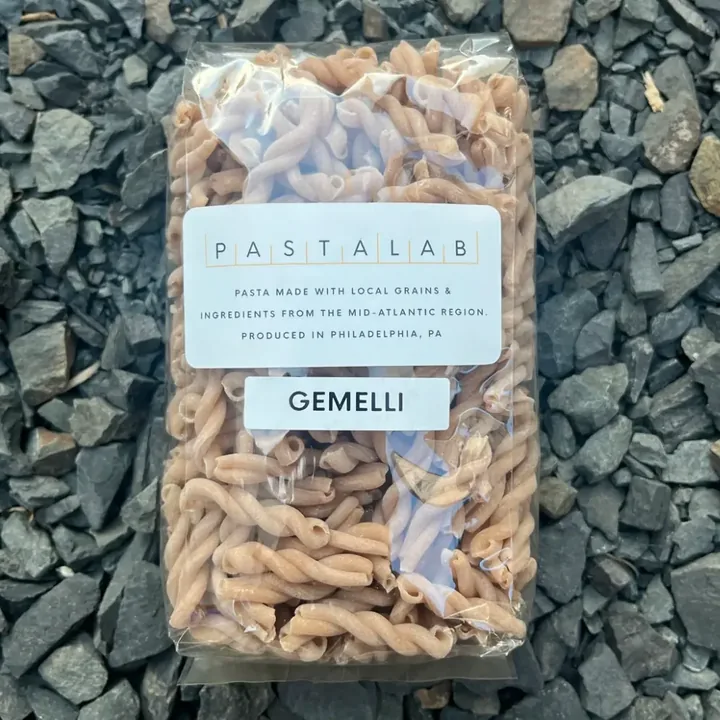
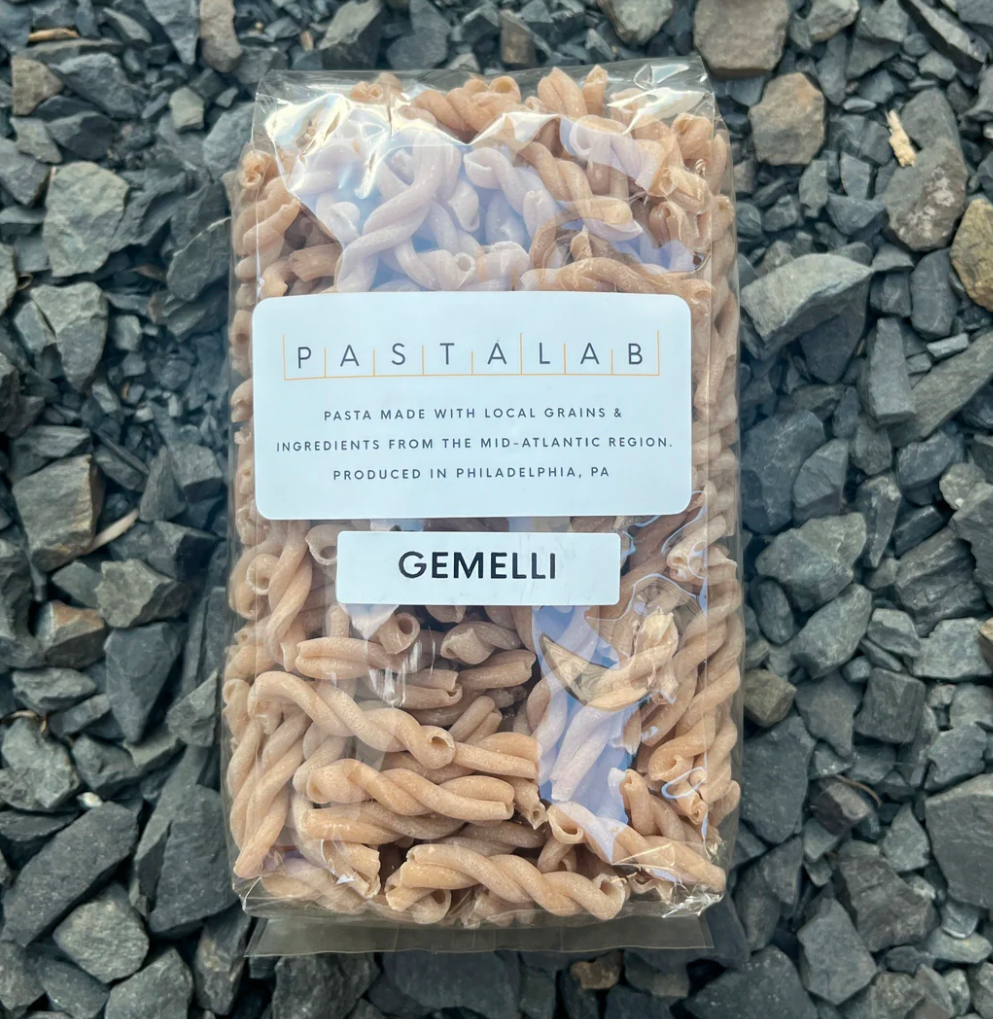
Both charts give dried pasta 1 to 2 years. Pasta Lab in Philadelphia puts a generous share of freshly milled local grain in every shape, and its four-bag box is "best used within 6 months." The maker's storefront explains why fresh-milled flour keeps for less time:
The germ contains oils that tend to go rancid if not removed from the flour before prolonged storage.
Pasta Lab, maker storefront on LocalCart
Keep grocery penne at the back of the shelf and cook the fresh-milled bags inside that six-month window. The box holds four 12 oz bags, and its Radiatori won a Good Food Award in 2024.
3. Dried beans & lentils
Buy them where the shelf turns over fast
Clemson gives dried beans and peas about 1 year. Beans start aging once dried, not when you buy them, and a bag rarely shows a harvest date. Buy from a bulk bin that gets refilled often, a pound at a time. Lentils need no soaking, so they are the bean for nights you did not plan.
4. All-purpose flour
White flour can wait, whole wheat cannot
White flour keeps 6 to 8 months on the Texas A&M chart and whole wheat 3 to 6. Clemson stretches white flour to about 10 to 15 months but gives whole wheat about 3, and says it keeps best in the refrigerator or freezer. It is the same germ oil Pasta Lab warns about. If you bake monthly, keep whole wheat in the freezer.
5. Rolled oats
Breakfast, binder & crumble topping in one bag
Oats make porridge, bind meatballs and top a fruit crisp. Texas A&M lists ready-to-cook oatmeal at 12 months. Move them to a jar with a tight lid. Clemson lists cereals and flour among the foods pantry insects get into, and the National Center for Home Food Preservation packs dried foods in "insect-proof containers."
6. Canned tomatoes or a jarred sauce
The acid that turns beans into dinner
Clemson groups canned tomatoes with canned fruit and pickles at about 12 to 18 months in a 65 to 70°F pantry. Keep whole peeled tomatoes for building your own sauce and one finished jar for nights you will not.
Vesta Kitchen's Sunday Kind of Love is a 16 fl oz jar made by John, a former pizza-shop cook and bread baker, and Vesta calls it great for pastas, pizzas and meatballs.

8. Olive oil & a neutral oil
Oil goes stale before anything else here
11. One good spice blend
One jar that seasons a whole tray of vegetables
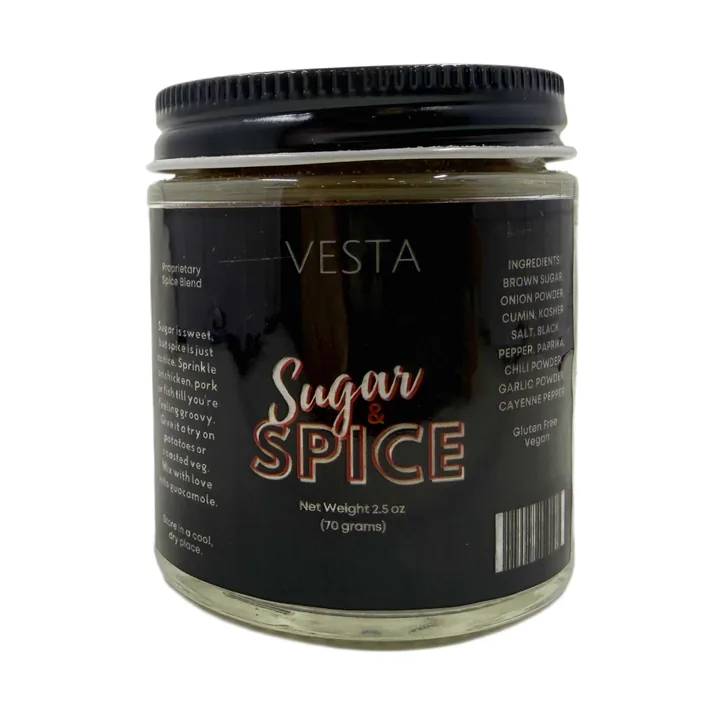
A blend does the measuring for you, so it gets used. Vesta Kitchen's Sugar & Spice jar (2.5 oz) lists brown sugar, onion powder, cumin, kosher salt, black pepper, paprika, chili powder, garlic powder and cayenne. FDA rules list ingredients in descending order by weight, so brown sugar leads. The maker suggests pork, chicken, grilled vegetables and blackened fish for tacos.
Ground spice life is where the charts disagree most: 6 months at Texas A&M, 2 to 3 years at Clemson. The Texas chart gives the test: "Replace if aroma fades."

12. Hot sauce
Heat & acid in one bottle
Most hot sauce is chile, vinegar and salt, and the acid helps it keep. Texas A&M gives commercial hot sauce 1 year, and Clemson gives Tabasco about 30 months.
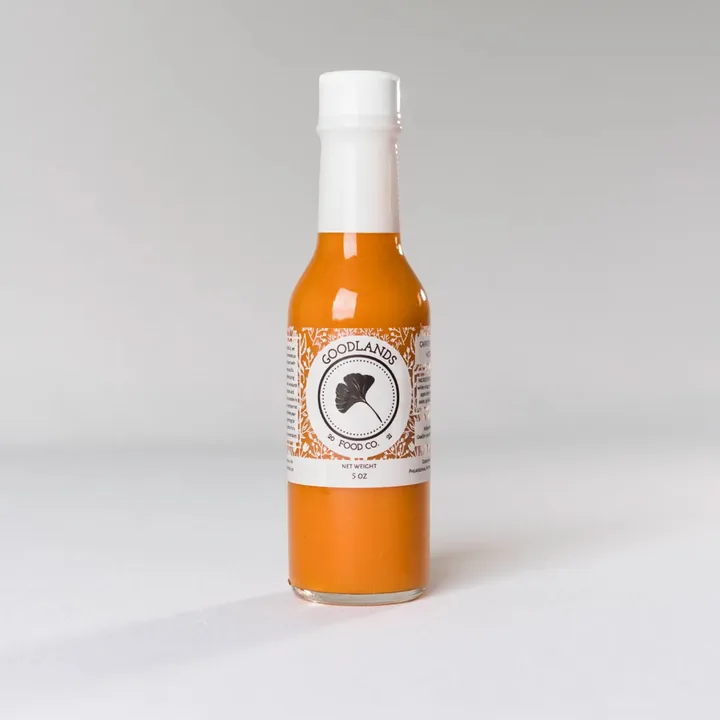
Small makers win on character. Goodlands Food Co. of New Jersey built its Jalapeno Dill Pickle Hot Sauce around fresh dill, garlic, toasted coriander and black pepper, and suggests it for breakfast sandwiches, falafel and potato salad. The bottle is 5 oz.
14. Honey or blackstrap molasses
A sweetener that brings its own flavor
Honey keeps 12 months on the Texas A&M chart, and Clemson gives honey and syrups 1 year. If honey crystallizes, Texas A&M says to warm the jar in a pan of hot water. Molasses gets 12 months unopened and 6 opened there, and refrigeration extends it.
McCutcheon's of Frederick, MD, sells unsulfured blackstrap molasses in a 21 oz jar for $3.45. The label calls it strong in flavor and "perfect for baking," so use it where you want depth more than sweetness, in gingerbread, baked beans or a pork glaze.

15. One jar of jam
Shelf-stable until the lid comes off
Commercial jam keeps 12 months in the pantry, and Texas A&M says to refrigerate it after opening. Homemade jam gets 1 to 3 months in the refrigerator.
Loudounberry Farm & Garden, a Loudoun County, VA farm market, prints "Refrigerate After Opening" on its jar labels. Its Traffic Jam is strawberries, raspberries and blueberries in a 10 oz jar. Whisk a spoonful into vinegar and oil for a fast fruit vinaigrette.

Where local grocery stores fit
Buy the commodities where the shelf turns over fast
Local grocery stores, from the independent grocer to the co-op with bulk bins, are the right place for most of this list. The gap between two brands of white rice is far smaller than the gap between two hot sauces.
Bulk bins help most with short-life items. Ground spices, brown rice and whole wheat flour sit at the short end of both charts, and a bin lets you buy two months of each.
Read "local" signs with care, because no federal rule defines the word on a shelf tag. The 2008 Farm Bill counted a product as local if it traveled "less than 400 miles from the origin of the product" or stayed in the state where it was produced, as the USDA National Agricultural Library notes, but each store draws its own line.
| Staple | Best bought at | Why |
|---|---|---|
| Rice, beans, oats | Bulk bin or store brand | Commodity quality, buy small |
| Flour, canned goods | Grocery store | Cheap, easy to rotate |
| Pasta, jarred tomato sauce | Either | Grocery for backup, a maker for flavor |
| Salt, sugar, vinegar | Grocery store | Keep for years |
| Olive oil | Grocery store, small bottle | Freshness beats the label |
| Spice blend | Small maker or bulk bin | High flavor per spoonful |
| Hot sauce, jam, molasses | Small maker | Character shows on the plate |
- Ask when the bulk bins get refilled.
- Ask which "local" items are made in your state, and by whom.
- Ask whether the store carries a regional mill's flour.
Kitchen staples worth upgrading
Spend where a spoonful changes the plate
The rule for upgrading kitchen staples: upgrade what you use by the spoonful and buy the rest by the pound. Basic pantry items like flour, sugar and salt are the wrong place to spend, since a stocked pantry needs them in quantity.
Lists of healthy pantry staples lean on the same grocery basics: beans, oats and canned tomatoes. Read the ingredient list and the sodium line, then buy the plainest version.
Sauces, spices & preserves
One cooking sauce, then one new jar at a time
The list above already spends on a spice blend, a hot sauce and a jam. The next upgrade is a cooking sauce, the one jar you use by the bottle rather than the drop. Caulfield Provision Company in Potomac, MD, makes 6 oz cooking sauces. Its #56 Smokey Red Pepper Chipotle ($6.50) lists water and diced tomatoes ahead of red jalapenos and chipotle powder, and the maker suggests tacos, eggs, fish and chili.
After that, add one unfamiliar jar per order from the small-batch sauces & spices or jams & preserves, and buy a single bottle before a pack. Food sales are final, so one jar is the cheap way to learn what you like.
Each maker ships their own products, with rates calculated for your address at checkout.
Shop sauces & spicesShelf stable foods & how long they keep
The dates measure peak quality, so store for flavor
Shelf stable foods keep at room temperature until opened, and heat shortens their life. The National Center for Home Food Preservation's home food storage guidance covers home-canned and home-dried food. Its page on storing canned foods keeps jars "between 50 and 70 °F," never above 95°F, near a range or in direct sun, and its drying guide gives most dried fruits "1 year at 60ºF, 6 months at 80ºF."
Store-bought food follows the same pattern. Clemson warns that high temperature or humidity "may reduce storage time considerably," so the chart below is the best case for a cool cupboard.
| Staple | Texas A&M, 2022 | Clemson, 2020 | After opening |
|---|---|---|---|
| White rice | 2 years | About 1 year | Keep airtight |
| Brown rice | 1 year | About 6 months | Keep airtight |
| Dried pasta | 1 to 2 years | 1 to 2 years | Keep airtight |
| White flour | 6 to 8 months | 10 to 15 months | Keep airtight |
| Whole wheat flour | 3 to 6 months | About 3 months | Best cold (Clemson) |
| Canned fish | 12 months | 2 to 5 years (canned meats) | 1 day, refrigerated |
| Oils | 6 to 12 months | Olive 6 months, vegetable 1 year | 6 to 8 months |
| Vinegar | 2 years | About 30 months | 12 months |
| Ground spices | 6 months | 2 to 3 years | Until aroma fades |
| Molasses | 12 months | 1 year (honey & syrups) | 6 months |
| Commercial jam | 12 months | Not listed | Refrigerate |
Throw it outThe same canning page is blunt: "Do not taste food from a jar with an unsealed lid or food that shows signs of spoilage." Bulging lids, spurting liquid and cotton-like mold all count.
Pantry rotation, once a season0 of 5 done
Sources
- Texas A&M AgriLife Extension, Safe Home Food Storage (NUTR-PU-100), 2022
- Clemson Cooperative Extension HGIC, Food Storage: Pantry (HGIC 3525), revised 2020
- National Center for Home Food Preservation, Packaging and Storing Dried Foods
- US Code of Federal Regulations, 21 CFR 101.4, Food: designation of ingredients
- USDA National Agricultural Library, What Makes a Food "Local?"
- National Center for Home Food Preservation, Storing
- National Center for Home Food Preservation, Storing Home Canned Foods
Pantry staples FAQs
Frequently asked questions
What two foods never expire?
On Clemson's pantry chart, salt and granulated sugar keep indefinitely, along with cream of tartar. Texas A&M is stricter and gives granulated sugar 2 years. Keep both dry, because moisture ruins them long before time does.
What are some basic food staples I should have in my kitchen?
Rice, pasta, dried beans, flour, oats, canned tomatoes, canned fish, olive oil, vinegar, salt, pepper, a spice blend, hot sauce, sugar, molasses or honey and one jam. That covers breakfast, a pot of beans and a pasta night.
How long do shelf stable foods last?
Most last 6 months to 2 years unopened on the Texas A&M and Clemson charts. Low-acid canned meats and vegetables run longest, about 2 to 5 years. Oils, brown rice and whole wheat flour run shortest.
Do you have to refrigerate jam after opening?
Yes. Texas A&M says to refrigerate commercial jams after opening, and Loudounberry's labels say "Refrigerate After Opening." Homemade jam gets 1 to 3 months in the refrigerator.
Can I buy pantry staples from small makers online?
Yes, for the flavor items. On LocalCart each maker ships their own products, so two makers means two shipping charges, with rates calculated for your address. Sales are final, so try one jar first.
Local food & small-batch shopping guides
More from the LocalCart blog