Cart is empty


A huckleberry is a small, round berry from a wild shrub related to the blueberry. Both belong to the heath family, and many western huckleberries share the blueberry's genus, Vaccinium. The big difference is farming: blueberries have been bred and planted in fields for more than a century, while western huckleberries are still picked mostly from the wild.
So huckleberries tend to taste stronger, arrive in a short late-summer season and cost more. Below is how they compare on taste, season and the jar, and where to find huckleberry jelly from a farm store.
What is a huckleberry
A name for several wild berries, not one plant
Short answer
Choose blueberries for everyday baking, huckleberries for a bolder, wilder jar.
The two are close relatives that look alike. Huckleberries are smaller, grow one berry at a time and are mostly wild-harvested.
- Blueberries: cultivated in fields, sold fresh and frozen
- Huckleberries: mostly picked from wild stands
- Huckleberries carry a stronger, more variable flavor
Huckleberry
Wild shrub, single berries, mid-to-late summer
Blueberry
Farmed shrub, berries in clusters, big yields
On LocalCart
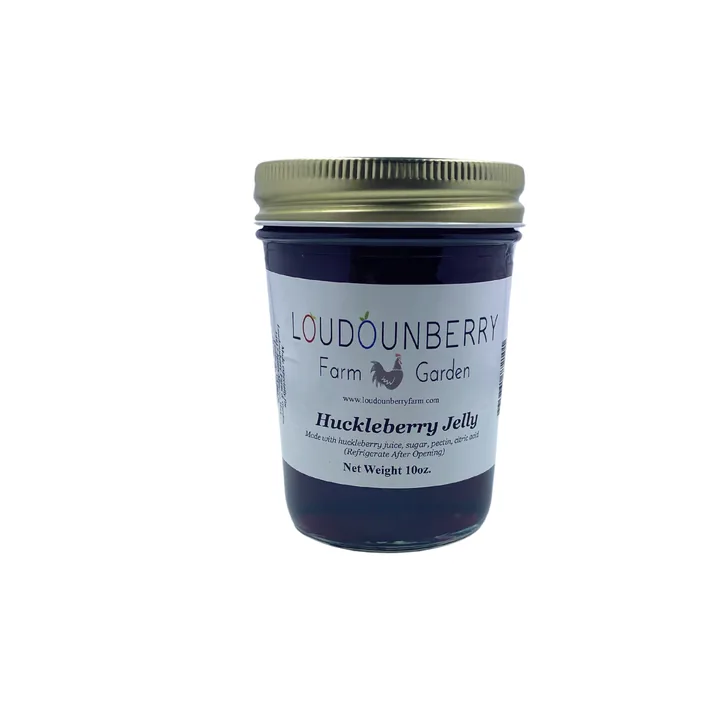
Loudounberry Huckleberry Jelly, $5.99
What is a huckleberry, exactly? It is a common name more than a single species. Wikipedia's huckleberry species overview says the name covers several plants in two closely related genera, Vaccinium and Gaylussacia. In the East, four Gaylussacia species are common, especially the black huckleberry. In the Pacific Northwest and the mountains of Idaho and Montana, the name usually means Vaccinium species such as the black huckleberry (V. membranaceum) and the Cascade huckleberry (V. deliciosum).
That overlap is why huckleberry vs blueberry is confusing. Wikipedia notes that in New England and parts of Appalachia, some berries called huckleberries elsewhere go by blueberry, depending on local custom. The huckleberry is also the state fruit of Idaho and Montana.
The plants differ in one visible way. University of Idaho Extension's bulletin Growing Western Huckleberries (Danny L. Barney, 1999) explains that western huckleberries sit in a different taxonomic section of Vaccinium (Myrtillus) from highbush and lowbush blueberries (Cyanococcus). Huckleberries produce single berries in the leaf axils of new shoots, while blueberries form clusters on 1-year-old wood, which gives blueberries greater yields.
Huckleberry taste vs blueberry flavor
Stronger, tarter & less predictable
What does huckleberry taste like? Think of a blueberry with the volume turned up: more tart, more intense and less uniform from one handful to the next. Wikipedia says huckleberries may be tart or sweet. The Idaho bulletin is more specific: research shows V. deliciosum and V. membranaceum are richer in certain flavor chemicals than domestic blueberries, and flavor can vary greatly from one site to another.
| Feature | Huckleberry | Blueberry |
|---|---|---|
| Flavor | Strong, wild, tart to sweet | Mild, sweet, consistent |
| Size | Small, about 5 to 10 mm | Larger in cultivated highbush types |
| Consistency | Varies by site and year | Bred for uniform fruit |
| Best use | Jam, syrup, pie, a jar to savor | Muffins, pancakes, snacking |
Huckleberry taste is not for everyone, the bulletin admits: not everyone cares for strong, wild huckleberry flavors, though enough people do to support picking from natural stands for roadside stands and processed products. If you love tart cherry or blackberry, you will likely enjoy it. If you want a gentle berry for a kid's breakfast, blueberry is the safer bet.
In a jar, the difference narrows. Sugar and cooking soften the tartness of both berries, so huckleberry jelly reads as a deeper, more winey blueberry flavor rather than a different fruit.
Huckleberry season & wild huckleberries
A short summer window, high on the mountain
Huckleberry season runs on the mountain's schedule. Wikipedia says western Vaccinium huckleberries usually ripen in mid-to-late summer, or later at high elevations. The Idaho bulletin notes black huckleberries grow at elevations up to 11,500 feet, with many productive sites between 4,000 and 6,000 feet, on acidic, sandy loam soils alongside fir trees.
Wild huckleberries have a long history as food. Wikipedia notes that Native American and First Nations people traditionally collected them along the Pacific coast, in interior British Columbia, Idaho and Montana, and the Idaho bulletin says some species were dried for winter and used as trade items by tribes of the Northwest.
Blueberries keep a much longer calendar in stores because they are a field crop. Wikipedia describes cultivated highbush blueberries grown on taller bushes for larger berries and lowbush wild blueberries managed in fields called barrens, and notes the United States produced 29% of the world's highbush blueberries in 2024. The modern highbush blueberry grew out of work by USDA botanist Frederick Coville and New Jersey grower Elizabeth White in the early 1900s.
Picking your ownIf you pick wild huckleberries, know the plant. Wikipedia notes the garden huckleberry, Solanum scabrum, is not a true huckleberry but a member of the nightshade family. Check land rules before you pick, and ask a local extension office if you are unsure what you have found.
Huckleberry jelly vs blueberry jam
One is clear juice, the other keeps the fruit
Huckleberry jelly and blueberry jam differ in form before they differ in fruit. The National Center for Home Food Preservation says jellies are usually made by cooking fruit juice with sugar, while jams are made by cooking crushed or chopped fruit. Jelly sets clear and smooth. Jam keeps the skins and pulp.
| Feature | Huckleberry jelly | Blueberry jam |
|---|---|---|
| Made from | Strained huckleberry juice | Crushed or chopped blueberries |
| Texture | Clear, smooth, firm set | Soft, spreadable, with skins |
| Federal standard | Huckleberry juice is not on the 21 CFR 150.140 jelly list | 21 CFR 150.160: blueberry is a Group I fruit |
| Best for | Glazes, thumbprint cookies, toast | Toast, yogurt, layer cakes |
The federal rules add a twist. In 21 CFR 150.160, the standard for jams and preserves, both blueberry and huckleberry are Group I fruits, which means a jam made from either must use at least 47 parts fruit to 55 parts sugar and reach at least 65% soluble solids. The jelly standard, 21 CFR 150.140, lists the juices it covers, and neither huckleberry nor blueberry juice is on that list. A huckleberry jelly is therefore a nonstandardized food, and its ingredient label is your guide.
Loudounberry's label is short. Loudounberry huckleberry jelly ($5.99, 10 oz) lists huckleberry juice, sugar, pectin and citric acid, and the jar shows a deep purple set. For a jam with blueberries in it, Loudounberry's Traffic Jam is a triple berry jam ($4.99, 10 oz) whose label lists strawberries, raspberries and blueberries, and its Black Bear Jam ($4.99) lists blackberries, blueberries and black raspberries. Neither is a single-fruit blueberry jam, so read them as berry blends.


Huckleberry jam at a local farm grocery store
Ask where the berries came from
Huckleberry jam and jelly are easiest to find where huckleberries grow, at roadside stands and shops in the Northwest. Elsewhere, a local farm grocery store is a good bet, because farm markets often carry small-batch preserves alongside produce.
Loudounberry Farm & Garden is that kind of store. Its LocalCart storefront describes a market for Loudoun County, Virginia, residents and visitors, with locally sourced grocery items, produce and farm and garden supplies. Its Huckleberry Jelly label does not say which huckleberry species is in the jar or where the berries were picked, so if that matters to you, ask the shop before you order. You can browse Loudounberry's range and other jams & jellies from makers on LocalCart.
Questions to ask about a huckleberry jar0 of 5 done
Once you open a jar, Loudounberry's labels say to refrigerate it, and the National Center for Home Food Preservation says opened home-canned, full-sugar jams and jellies are best stored for 1 month in the refrigerator at 40°F or lower. LocalCart's post on the artisans & farmers behind the jars covers why buying from small producers matters.
Sources
- Wikipedia, Huckleberry
- University of Idaho Extension, Growing Western Huckleberries (Bulletin 821), Danny L. Barney, 1999
- Wikipedia, Blueberry
- National Center for Home Food Preservation, Types of jellied products
- 21 CFR 150.160, Fruit preserves and jams (Cornell LII)
- 21 CFR 150.140, Fruit jelly (Cornell LII)
- National Center for Home Food Preservation, Storing home canned jams and jellies
Huckleberry vs blueberry FAQs
Frequently asked questions
What does huckleberry taste like?
Like a stronger, tarter blueberry with a wilder edge. Flavor varies a lot by species and site, and University of Idaho Extension notes research showing western huckleberries are richer in certain flavor chemicals than domestic blueberries.
Can you grow huckleberries at home?
You can try, but it takes patience. University of Idaho Extension's 1999 bulletin says western huckleberries can be grown from seed, may start fruiting 3 to 5 years after planting and take up to 15 years to reach full maturity. They need acidic soil, and most attempts to grow them commercially in fields had failed when the bulletin was written.
Why do huckleberries cost more?
Because most are picked by hand from wild bushes. Western huckleberries have not been domesticated the way blueberries have, and they bear single berries rather than clusters, so yields are lower and the season is short.
Are huckleberries & blueberries related?
Yes. Many huckleberries and all blueberries are in the genus Vaccinium, in the heath family. Eastern huckleberries belong to the related genus Gaylussacia.
Does huckleberry jelly need refrigeration after opening?
Yes. Loudounberry's jar says Refrigerate After Opening, and NCHFP advises keeping opened home-canned jams and jellies at 40°F or lower and throwing out any jar with mold or a yeasty smell.
Local food & small-batch shopping guides
More from the LocalCart blog