Cart is empty


Most hot sauce is an acidified food in the eyes of food regulators: peppers, which are low in acid, made safe by adding vinegar or another acid. That one fact shapes almost every step of starting a hot sauce business, from where you can cook it to what goes on the label.
Rules vary by state, and this guide is not legal advice. It walks through the federal rules that apply everywhere, shows how two states handle home kitchens, and points you to the people who sign off on a recipe. The maker example throughout is Vesta Kitchen in Pottstown, PA, which sells fermented hot sauces on LocalCart.
Test your recipe & hot sauce ingredients
Write it down before you scale it up
Learning how to start a hot sauce business begins with a recipe you can repeat exactly. A regulator or process authority will review a written formula, not a pinch-and-taste method, so weigh every ingredient and record it.
What you need
-
A written recipe by weightEvery ingredient in grams or ounces, plus the method and cooking times.
-
A pH meterAcidity is the main safety number for a hot sauce, so you will measure it often.
-
Batch recordsDate, batch size, pH reading and who made it, for every batch.
-
Tasters who are not your friendsPeople who will tell you the sauce is too salty.
The number that matters most is pH. Under 21 CFR 114.3, acidified foods are low-acid foods with acid or acid foods added, with a water activity above 0.85 and a finished equilibrium pH of 4.6 or below. Peppers are on the regulation's own list of examples. Low-acid foods are those with a finished equilibrium pH above 4.6.
That is why a hot sauce business tests early and often. Changing the pepper, the vinegar or the ratio of one to the other can move the pH, so treat every recipe change as a new product until you have measured it. Keep your hot sauce ingredients consistent, from the same suppliers where you can, and note any change in the batch record.
Start with one sauceLaunch with one recipe, not five. Each product may need its own process review and filing, so a single sauce keeps the first round of paperwork and testing smaller.
Check cottage food & acidified food rules
Your state decides whether a home kitchen is allowed
States write their own home food rules, and hot sauce is often treated differently from cookies or bread because of its pH. Before you buy bottles, find out which rules cover your hot sauce ingredients and method in your state.
Pennsylvania is a useful example. Penn State Extension says the state agriculture department's Bureau of Food Safety and Laboratory Services oversees food made and sold in Pennsylvania, and a home business can operate as a Limited Food Establishment if the products and the home meet the rules. Penn State lists hot sauces, salsa and BBQ sauce as acidified foods, and says producers of acidified foods must have written recipes and procedures and must have a process flow approved by the food inspector before registration and sale.
Mississippi allows acidified foods as cottage foods if they meet the federal definition in 21 CFR 114, according to Mississippi State University Extension. Its guide also caps cottage food sales at $35,000 in gross annual sales and prohibits selling cottage foods online, in retail or wholesale stores, or by shipping. That means a Mississippi home-kitchen sauce cannot go on a grocery shelf at all.
A fermented hot sauce raises its own questions. Penn State lists fermented foods as a separate category from acidified foods, and tells producers who are unsure which group a product belongs in to ask the food inspector. Mississippi State's guide, by contrast, gives fermented sauerkraut and kimchi as examples of acidified foods. Vesta Kitchen's Garlic Blues ($12.00) is one example of a fermented sauce on LocalCart, fermented with a large amount of garlic.
Questions for your state agency0 of 5 done
Work with a co packer or a licensed kitchen
Grow past home rules with a scheduled process
If your state's cottage food rules do not allow hot sauce, or do not allow the stores you want to sell to, you will need a commercial kitchen, a shared licensed kitchen or a contract manufacturer. At that point the federal acidified food rules in 21 CFR part 114 apply in full.
Penn State Extension's summary of acidified food regulatory requirements says only home-based Limited Food Establishments are exempt from the federal canning regulations. Commercial processors must register with the FDA and file a scheduled process through a process authority, and operations must be supervised by someone who has attended a Better Process Control School or its equivalent. Penn State says it offers the course each spring.
- Register the facility. Under 21 CFR 108.25, a commercial processor registers on Form FDA 2541 no later than 10 days after it first starts making acidified foods.
- Get a scheduled process. A process authority, a person with expert training in acidification, sets the heat treatment and pH controls for your product. The Texas health department notes that the Association of Food and Drug Officials keeps a list of process authorities across the country.
- File the process. Within 60 days of registering, and before packing any new product, the processor files each scheduled process on Form FDA 2541e for each acidified food in each container size, as the FDA's registration page explains.
- Train the supervisor. 21 CFR 114.10 requires operators to work under the supervision of someone who completed an FDA-approved school covering pH controls and acidification.
A co packer that already makes acidified foods may hold its own registration and process filings, which can save you steps, but ask which filings cover your recipe and container size before you sign anything. Moving out of a cottage food setup is usually a cost and paperwork step up, so price it before you need it.
How to bottle hot sauce & label it
Follow the process exactly, then label every bottle
Bottling is where the scheduled process becomes real. Under 21 CFR 114.80, acidified foods must reach a finished equilibrium pH of 4.6 or lower within the time set in the scheduled process, and must be heat treated enough to destroy the microorganisms that could grow in the bottle on a shelf. Your process authority or co packer sets those numbers, not a blog post.
The same section requires each container to carry an identifying code, permanently visible, that shows the establishment, the product and the year, day and period it was packed. That lot code is how you pull a bad batch back from stores. 21 CFR 114.100 also requires records of pH measurements and other critical factors for each batch.
| Label item | What it means | Where the rule is |
|---|---|---|
| Name of the food | A plain statement of what it is, such as hot sauce | Federal labeling rules, 21 CFR 101 |
| Net quantity | The amount in the bottle, such as 5 fl oz | Federal labeling rules |
| Ingredient list | Every ingredient, in descending order by weight | Federal labeling rules |
| Name & place of business | The maker, packer or distributor, with "Manufactured for" or "Distributed by" if someone else made it | 21 CFR 101.5 |
| Major food allergens | Any of the nine major allergens, such as milk, sesame or tree nuts | FDA food allergies |
| Nutrition Facts | Required unless you qualify for the small business exemption | FDA exemption page |
| Lot code | Packing establishment, product & date in code | 21 CFR 114.80(b) |
Allergens show up in hot sauce more than you might expect. Vesta Kitchen's Tangled Up in Blue, a buffalo-style sauce on LocalCart, is finished with butter and blue cheese, both of which are milk. Some states also require an extra statement on cottage food labels. Maryland's Health-General 21-330.1, for example, requires the statement "Made by a cottage food business that is not subject to Maryland's food safety regulations." Copy the wording from your own state's rules, not from another maker's bottle.
Do not skip the pH checkMississippi State University Extension recommends pH testing home-canned acidified products 24 hours after processing. Write the reading in your batch record every time.
Sell local hot sauce to local independent grocery stores
Small stores can say yes on the spot
Once you know how to bottle hot sauce legally, independent grocers, co-ops and farm markets are the natural first shelves. The person who orders is often in the building, and a maker who walks in with a sample can get an answer that day.
- Confirm the store can buy from you. If you make the sauce under cottage food rules, check that your state allows retail sales at all. Mississippi, for example, does not.
- Bring a sample and a one-page sheet. List the price per bottle and per case, bottle size, ingredients, allergens and how to reach you.
- Show the paperwork. Have a copy of your registration or license ready, and ask what else the store requires before it can stock you.
- Offer to demo. A tasting table lets shoppers try the sauce before they buy a bottle, which is an easy offer for a store to accept.
- Follow up on the lot codes. Note which lots went to which store, so a recall or a quality question can be traced in minutes.
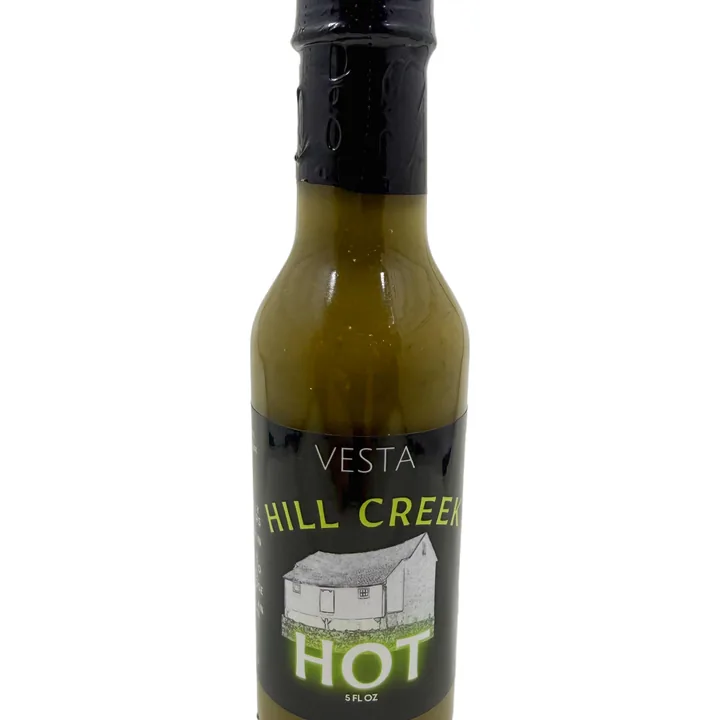
Point to where your peppers come from if you can. Vesta Kitchen's Hill Creek Hot Sauce names Hill Creek Farm in Chester County, PA, as the source of its peppers, and its Yellow Submarine names Knee High Farm and Hill Creek Farm. A named farm on the label tells a store buyer, and their shoppers, exactly what makes the sauce local.

Sources
- 21 CFR part 114, Acidified foods (eCFR)
- 21 CFR 114.3, Definitions (Cornell LII)
- 21 CFR 108.25, Acidified foods registration & process filing (Cornell LII)
- FDA, Establishment registration & process filing for acidified and low-acid canned foods
- Penn State Extension, Who to contact if you want to sell home preserved foods
- Penn State Extension, Acidified and low-acid food regulatory requirements
- Mississippi State University Extension, Mississippi cottage food operations regulations & guidance
- Texas DSHS, Directory of process authorities
- Maryland Health-General 21-330.1, Cottage food businesses
- 21 CFR 101.5, Food, name and place of business (Cornell LII)
- FDA, Food allergies
- FDA, Small business nutrition labeling exemption
Hot sauce business FAQs
Frequently asked questions
Do you need a license to sell hot sauce?
Almost always, yes. Home-kitchen sellers usually need to register with or get approval from a state agency, and commercial makers of shelf-stable acidified foods must register with the FDA and file a scheduled process. Check with your state agriculture or health department first, because selling hot sauce under the wrong category can stop you at the first store.
Can you sell fermented sauce made at home?
It depends on your state and on how the agency classifies your sauce. Penn State Extension treats fermented foods as a separate category and tells makers to ask the food inspector, while Mississippi State's guide groups fermented foods with acidified foods. Ask before you sell, and keep pH records either way.
How much does it cost to start?
There is no single number. Costs depend on your state's registration fees, whether you rent a kitchen or hire a co packer, process authority review, lab testing, bottles, labels and liability coverage. Get written quotes for each before you set a bottle price, and price the sauce so a store can mark it up and still sell it.
Where can I sell local hot sauce online?
Marketplaces for small food makers are one route once your sauce is legal to ship. LocalCart takes applications from makers, and selling hot sauce on LocalCart starts with a short form asking for your business name, a description and your address. It publishes no fees or commission rates, so ask before you list. Browse the sauce makers already listed to see how others present their bottles.
What do local independent grocery stores look for in a new hot sauce?
A clear label, a price that leaves them room, proof that you are licensed and a story shoppers can repeat. Vesta Kitchen's Hill Creek sauce shows the last one well: the farm that grew the peppers is right in the description.
Local food & small-batch shopping guides
More from the LocalCart blog