Cart is empty


An independent grocery store, in the USDA Economic Research Service definition, is one whose owner runs fewer than four stores. Those stores rang up about 11 percent of US grocery sales in 2015, according to ERS. Small share, outsized role in a lot of towns.
Usually the case for them arrives as a slogan. This list swaps the slogan for the evidence: what local spending studies measured, what USDA counts, what the Federal Trade Commission found when shelves went bare in 2020, and one benefit (food miles) that is smaller than most people assume.
Why shop local for food
Eight benefits, each with its evidence attached
Ask why shop local and you will hear about community, character and keeping money in town. Some of that is measurable and some is not. Below are the benefits of shopping local that have a number or a named source behind them, ranked roughly from strongest evidence to weakest.
One ground rule. "Local" has no single legal meaning for shoppers. The 2008 Farm Bill defined local food as under 400 miles from origin, or within the same state, but no federal rule applies that definition to store signs. When a grocer says buy local, ask what radius they mean.
- 1More of each dollar stays in townBest for the local economy argument
- 2Shelves stocked from nearby suppliersBest for farms and food makers
- 3Local giving that shows up in the booksBest for schools, teams and food banks
- 4Groceries where chains are thinBest for rural shoppers
- 5Competition in a concentrated marketBest for anyone who cares about prices
- 6A check on big-buyer powerBest for supply resilience
- 7Answers from the person who decidesBest for shoppers with questions
- 8Fewer food miles, a modest gainBest for an honest climate picture
1. More of each dollar stays in town
About 48 cents of each dollar recirculated, against 13.6 at chains
Civic Economics compiled the results of nine of its local spending studies in 2012. Across them, independent businesses recirculated 48 percent of revenue in the local economy, compared with 13.6 percent for chain retailers, as graphed by the American Independent Business Alliance.
That 48 percent splits into profit and labor (25.2 percent), goods bought locally for resale (14.3 percent), goods and services bought locally for the business itself (5.7 percent) and charitable giving (3 percent). The numbers come from surveys independent businesses filled out about their own spending, and they shift with the mix of studies: AMIBA’s current summary of the retail studies puts the independent figure at 52.9 percent. They describe independent businesses in general rather than grocers, so treat the gap as a direction, not a grocery price tag.
2. Shelves stocked from nearby suppliers
Independents bought 14 cents of each dollar locally for resale
That 14.3 percent "procurement for resale" slice is the part of the multiplier a shopper can see on the shelf. In a grocery store it would be the jams, sauces, eggs and flour bought from producers in the region.
USDA data points the same way from the farm side. Its 2022 Census of Agriculture counted $17.5 billion in food sold through direct marketing, and $14.2 billion of it went to retailers, institutions and intermediaries such as food hubs rather than straight to shoppers, ERS reported in 2024. Operations selling through those channels more than doubled from 2017 to 2022, to 60,332. Census tables do not split out independent grocers, so read it as "stores are a big outlet for local food," not as a count of independents.
3. Local giving that shows up in the books
Charitable giving was 3 percent of revenue in the compiled studies
The sponsorship banner at a Little League field is easy to wave off as anecdote. In the 2012 compilation it was a line item: 3 percent of independents’ revenue went to local charitable giving. Small, but it is counted inside the 48 percent, not added on top.
4. Groceries where chains are thin
In remote rural counties, independent stores outnumber chain stores
ERS found that remote rural counties averaged 2.1 independent grocery stores against 1.9 chain stores in 2015. In 576 counties, mostly rural, independents took at least half of all grocery sales. Those counties held 4 percent of the US population (ERS, 2018).
In the counties where about 4 percent of Americans live, then, independents do at least half the grocery business. Spending there keeps them open.
5. Competition in a concentrated market
The 20 largest food retailers took 65.2 percent of sales in 2022
US food stores, warehouse clubs and supercenters sold $796 billion of food in 2022, and the 20 largest retailers accounted for $519 billion of it, or 65.2 percent (ERS).
Every independent that stays open is one more buyer for suppliers and one more price for shoppers to compare. That is a structural benefit, and it does not depend on any single store being cheaper.
6. A check on big-buyer power
Small grocers were shorted first when supply ran tight
The FTC’s March 2024 staff report on the pandemic grocery supply chain found that "smaller firms, especially smaller grocery retailers, disproportionately faced difficulties obtaining products." Suppliers sometimes favored big buyers that threatened fines for late deliveries, giving larger companies a competitive advantage over smaller retailers. It also found food and beverage retailer revenues ran more than 6 percent over total costs in 2021 and 7 percent in the first three quarters of 2023.
Shopping independent does not fix that imbalance. It keeps alive the smaller customers suppliers need.
7. Answers from the person who decides
The owner runs three stores at most
This benefit has no study attached, and it should not pretend to. What it rests on is the definition: a store whose owner runs three stores at most, so the person who decides what goes on the shelf is rarely far away. Ask for a product, a supplier or a special order and you may be talking to the one who can say yes.
Questions to ask your grocer0 of 5 done
8. Fewer food miles, a modest gain
Transport is a small slice of most foods’ footprint
Shorter supply chains do cut transport, but transport is a minor part of food’s climate cost. Hannah Ritchie’s 2020 analysis for Our World in Data found transport accounts for less than 10 percent of emissions for most food products, and concluded you have a larger impact by focusing on what you eat than on whether it is local.
So count food miles as a small plus. For the climate, the cart matters more than the store’s address.
Local independent grocery stores vs chains
Where the two differ, & where the data runs out
Most local independent grocery stores are small businesses competing with national chains on the same products, so the useful comparison is about structure rather than vibes.
| Independent grocery stores | Chain grocery stores | |
|---|---|---|
| Ownership | Owner runs fewer than 4 stores (ERS) | Regional or national company |
| Share of US grocery sales | About 11 percent in 2015 (ERS) | The rest, with the top 20 at 65.2 percent of food sales in 2022 |
| Rural presence | 2.1 stores per remote rural county in 2015 | 1.9 stores per remote rural county in 2015 |
| Revenue recirculated locally | 48 percent (Civic Economics, 9 studies, 2012) | 13.6 percent (same studies) |
| Supply in a shortage | Had more trouble getting product (FTC, 2024) | Larger buyers protected supply better |
| Price | No national study we found settles it | Same: compare unit prices item by item |
The last row matters. There is no solid national figure showing independents are cheaper or pricier across the board, so anyone telling you either way is guessing. Compare unit prices on the ten items you buy most and decide from your own receipts.
Spot an independentLook for an owner’s name on the door or the receipt, a store count you can see on one hand, and shelf tags for regional brands. When in doubt, ask who owns the place.
Support local business & the local economy
What the multiplier studies measure, & what they skip
The argument that you should support local business because of the local economy rests on a handful of studies. Read them closely and they hold up as a direction, with real limits. LocalCart has written about how shopping local strengthens communities and the wider benefits of shopping local. This section is the fine print.
The local multiplier effect
Money that circulates before it leaves
Economists call it the local multiplier effect: a dollar spent at a locally owned business gets re-spent nearby, on wages, suppliers and services, before it leaks out of the area. AMIBA breaks it into three parts: direct spending by the business, indirect spending as its suppliers re-spend, and induced spending by employees and owners.
48%
of independents’ revenue recirculated locally
Civic Economics, 9 studies, 2012
13.6%
of chain retailers’ revenue recirculated locally
Civic Economics, 9 studies, 2012
$0.11
less spent in other sectors per $1 of new demand at one food hub
Jablonski, Schmit & Kay, 2016
The first such study ran in Austin, Texas in 2002, comparing two local stores with a proposed Borders. Civic Economics’ Indie Impact series followed from 2012, and the local multiplier studies AMIBA compiles all point the same way. Three limits before you quote them:
- Who answered and who paid. Civic Economics says a local sponsoring group recruits independent retailers and restaurants to complete surveys, with partial matching funds from the American Booksellers Association. The studies count direct and indirect local spending. That makes them advocacy research, not peer-reviewed economics, though not wrong for that.
- What they leave out. They measure where revenue goes, not what spending it displaced. A peer-reviewed 2016 study of one successful food hub by Jablonski, Schmit and Kay used an input-output model and customer surveys. It found a gross output multiplier of 1.75, but also that each $1 of new demand for the hub’s products cut $0.11 of purchases in other sectors. Net gains are real and smaller than gross ones, and a food hub is not a grocery store.
- Which businesses. AMIBA itself notes restaurants show bigger multipliers than retailers because they are labor-heavy, and that most retailers produce a "more modest" effect unless they source a lot locally. A grocery store is a retailer.
Read together, the evidence supports "more of your money stays nearby," most of all when the store buys from regional suppliers. Small business benefits are real, and easier to defend when nobody inflates them.
Where small-batch makers come in
The other half of local: who makes what is on the shelf
The multiplier grows when a store buys from regional producers, which is why small-batch makers matter to this whole argument. Their problem is reach. As LocalCart’s About page puts it, local producers "often struggle to reach the people who would appreciate their goods the most."
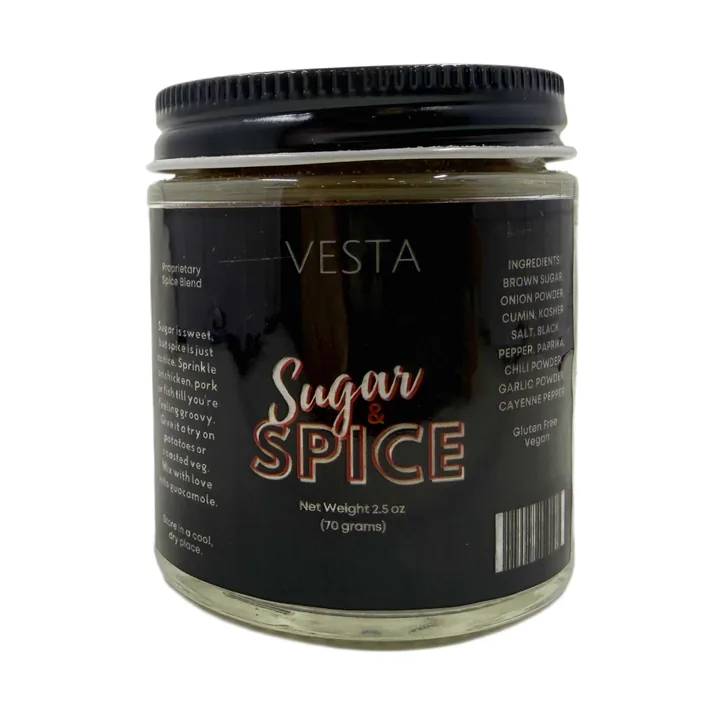
That gap is the reason behind LocalCart's brand story. The small-batch makers on LocalCart include producers in Virginia, Maryland, Pennsylvania and beyond. Loudounberry Farm & Garden, a Loudoun County farm market, sells its jams and salsas. Caulfield Provision Company in Potomac, Maryland, a woman-owned family business, sells numbered cooking sauces. McCutcheon’s in Frederick, Maryland, which says 16 of its full-time staff are fourth- and fifth-generation family members, sells blackstrap molasses.


Buying there works differently from a grocery cart. Each maker ships its own products, so a cart with items from two makers shows two shipping charges at checkout, with rates calculated for your address. Sales are final under LocalCart’s no-returns policy, and issues go to the maker or to info@localcart.net. LocalCart does not currently sell fresh produce, meat or bread, so it complements your independent grocer rather than replacing it.
Sources
- USDA ERS, Independent grocery stores remain important for rural communities, Amber Waves, 2018
- USDA National Agricultural Library, What makes a food local
- AMIBA, The local multiplier effect (Civic Economics 2012 compilation)
- USDA ERS, 2022 Census of Agriculture shows growth in direct sales, 2024
- USDA ERS, Retail trends, updated 2026
- FTC, Feeding America in a Time of Crisis staff report, March 2024
- Our World in Data, Hannah Ritchie, Focus on what you eat, not whether your food is local, 2020
- Civic Economics, Indie Impact study series
- Jablonski, Schmit and Kay, Agricultural and Resource Economics Review, 2016
Shopping local FAQs
Frequently asked questions
What does it mean to buy locally?
It means buying food grown or made near where you live, but there is no single legal radius. The 2008 Farm Bill defined local food as under 400 miles from origin or within the same state, but that is not a labeling rule, and stores set their own definitions, so ask what a "local" sign means.
Is shopping at an independent grocery store more expensive?
Sometimes, sometimes not. We found no national study that settles it, and prices vary by item and region. Compare unit prices on the things you buy most, at both kinds of store, for a few weeks.
Is buying local food better for the environment?
Only a little, through transport. Our World in Data found transport is under 10 percent of emissions for most foods, so what you buy has a bigger effect than where it was made.
What are the advantages of small businesses for a community?
The measurable ones are local recirculation of revenue, local giving and grocery access in rural counties where chains are scarce. Owners are also close enough to answer questions and special-order products.
Does LocalCart deliver groceries?
No. LocalCart is an online marketplace for small-batch foods such as preserves, sauces, spices and pantry goods, and each maker ships its own orders. It does not currently sell fresh produce, meat or bread.
Local food & small-batch shopping guides
More from the LocalCart blog