Cart is empty


A regional food is one whose home you can name: a grape that grows wild from Delaware to Florida, a rice that Minnesota law protects by name, a ham that has to be cured inside one Virginia town. Many of them now ship.
This list covers ten, with the history or statute behind each origin. Four are on LocalCart from makers in Virginia, Maryland and Pennsylvania, and a fifth has a close cousin there. For the rest, each entry tells you what to look for on the label instead.
Regional dishes & pantry specialties
Ten specialties, each with its origin on the record
American regional cuisine is easier to taste than to define. The Wikipedia overview of US regional cuisine runs from New England to Hawaii. This list sticks to regional dishes and pantry staples whose origin a statute, a state agency, an extension service or a historian has written down.
Each entry gives the home region, the source and, where one exists, a jar you can order. Not every regional American food is sold online by a small maker, so browse regional food from small makers to see what is listed today.
- 1Muscadine jellyBest for biscuits and toast
- 2Molasses for shoofly pieBest for bakers
- 3Buffalo wing sauceBest for game day
- 4Louisiana pepper sauceBest for fermentation fans
- 5Huckleberry jellyBest for pancakes
- 6Virginia country hamBest for holiday tables
- 7Maple syrupBest for reading a grade label
- 8New Mexico green chileBest for stews and burgers
- 9Minnesota wild riceBest for soups and stuffing
- 10Sorghum syrupBest for biscuits and glazes
1. Muscadine jelly
The first native grape cultivated in North America
University of Florida extension scientists write that the muscadine "was the first native grape species to be cultivated in North America," with a natural range from Delaware to central Florida and along the Gulf Coast to east Texas. North Carolina made the scuppernong, a muscadine grape, its official state fruit in 2001.
On LocalCart, a Loudoun County, Virginia farm market called Loudounberry lists a Muscadine Jam at $4.99. The jar itself reads Muscadine Jelly, a 19 oz jar of cane sugar, muscadine juice, water, pectin and citric acid. Juice rather than crushed fruit is what makes it a jelly.

2. Molasses for shoofly pie
A Pennsylvania Dutch pie built on a pantry jar
A 2025 roadside marker in Telford, Pennsylvania, from the William G. Pomeroy Foundation, calls shoofly pie a molasses-based pie with a crumb topping, believed to come from an 1876 Centennial cake recipe and a Pennsylvania Dutch tradition by 1920.
The pie needs molasses, and McCutcheon’s in Frederick, Maryland sells a 21 oz jar of unsulphured blackstrap for $3.45. Its label calls it strong-flavored and "perfect for baking," so taste it before you pour a full cup into a recipe written for a milder molasses.

3. Buffalo wing sauce
Hot sauce & bleu cheese, by way of a Buffalo bar
The usual story puts the first Buffalo wings at Frank and Teressa Bellissimo’s Anchor Bar in 1964: halved, deep-fried, tossed in hot sauce and served with celery and bleu cheese dressing. Jeff Z. Klein, writing for Buffalo Toronto Public Media, notes that Anchor Bar ads from late 1963 already mention fried chicken wings, and that John Young was selling his own breaded wings with Mambo sauce in Buffalo in 1963.
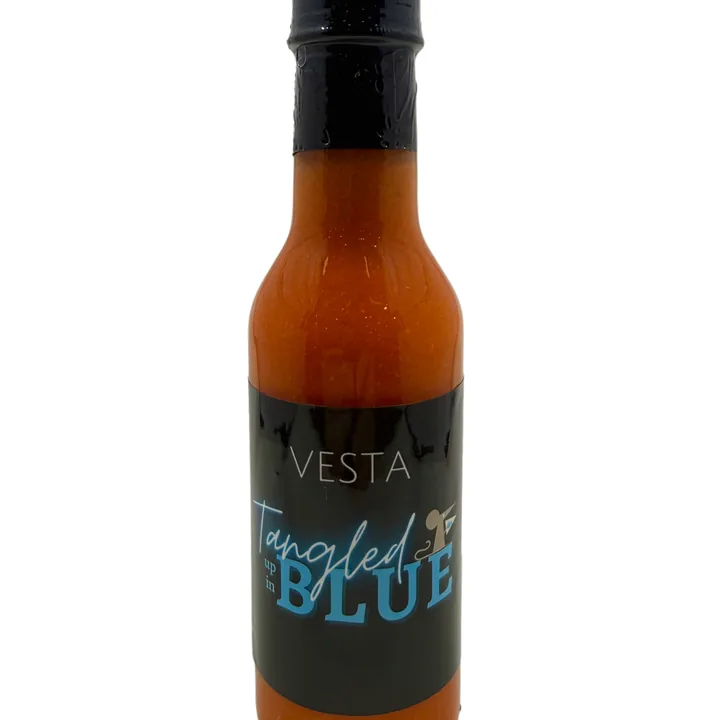
For a bottled take, Tangled Up in Blue from Vesta Kitchen in Pottstown, Pennsylvania is a buffalo-style hot sauce finished with butter and blue cheese from Birch Run Hills Farm. It contains dairy.

4. Louisiana pepper sauce
Aged pepper mash, vinegar & a Maryland-born inventor
Historian Shane K. Bernard writes in 64 Parishes that Edmund McIlhenny, a native of Hagerstown, Maryland, grew his first commercial pepper crop in 1868 on Avery Island and sold his first bottle of Tabasco sauce the next year. He crushed ripe peppers with Avery Island salt, aged that mash for thirty days, then blended it with French white wine vinegar and aged it at least thirty days more. Today the mash ages up to three years in white oak barrels.
No Louisiana maker sells on LocalCart. The closest relative is Vesta Kitchen’s Hill Creek Hot Sauce, which its page describes as a fermented hot sauce made with peppers grown at Hill Creek Farm in Chester County, Pennsylvania. A different place and recipe, but another sauce that lets the peppers work before bottling.

5. Huckleberry jelly
A wild berry that has mostly refused to be farmed
Idaho named the huckleberry its official state fruit in 2000. A 1999 University of Idaho Extension bulletin explains why it stays special: western huckleberries are harvested from the wild, and attempts to grow them commercially in fields have mostly failed. Eastern "huckleberries" belong to a different genus, Gaylussacia.
The Huckleberry Jelly on LocalCart is a 10 oz jar of huckleberry juice, sugar, pectin and citric acid, $5.99. Its label does not say where the berries were picked or which kind they are.

6. Virginia country ham
Salt, smoke & at least six months of waiting
Few foods have their origin written into state code. Virginia law defines a genuine Smithfield ham as one dry-salted, cured, smoked and aged for at least six months, with every step inside the town limits of Smithfield. A ham cured anywhere else can be excellent, but it is not a genuine Smithfield ham.
7. Maple syrup
One grading system for a crop shared with Canada
USDA replaced its maple grades in a notice published January 29, 2015, effective March 2, 2015. Syrup graded for retail is now Grade A Golden, Amber, Dark or Very Dark, each paired with a taste word running from delicate to strong. The federal grades are voluntary, and states such as Vermont and Maine keep their own rules. Vermont’s 2014 rules let packers use "Vermont Fancy" until January 1, 2017.
8. New Mexico green chile
A pepper that state law guards by name
Under the New Mexico Chile Advertising Act, it is unlawful to advertise or sell a product in a way that leads a shopper to believe its chile is from New Mexico when it is not. Brands whose names predate the law must print "NOT GROWN IN NEW MEXICO" on labels, a rule in force since July 1, 2013, per the New Mexico Department of Agriculture.
9. Minnesota wild rice
Lake & river rice, labeled by how it was grown
Minnesota statute 30.49 requires cultivated wild rice sold in the state to be labeled "paddy" or "cultivated". A package of only natural lake or river rice must read "100 percent naturally grown, lake and river wild rice," machine-harvested rice has to say so near the product name, and 100 percent hand-harvested rice may say "hand harvested." Only rice grown entirely in Minnesota may be labeled "grown in Minnesota."
10. Sorghum syrup
Stalk juice boiled down, & not really molasses
Sweet sorghum syrup is the juice of crushed sorghum stalks cooked down until thick. The University of Kentucky’s Sweet Sorghum for Syrup profile (last revised 2013) notes it is "sometimes incorrectly referred to as sorghum molasses." It says Kentucky leads the country, with 2008 syrup worth over $12 million, and that Kentucky and its neighbors make over 90 percent of US sorghum syrup.
How local community markets keep them alive
Small foods survive where small sellers can reach buyers
Many of these foods started too small for a national shelf. Sorghum shows how they last instead: the Kentucky profile lists roadside stands, on-farm sales, local retailers and the internet as its outlets. Local community markets are where local specialties find their first regular buyers.
Federal numbers show the market is shifting rather than shrinking. The 2022 Census of Agriculture counted 116,617 operations selling directly to consumers, 10.3 percent fewer than in 2017, while operations selling local food through stores, institutions and food hubs more than doubled, ERS reported in 2024. More local food now reaches people through a middle step.
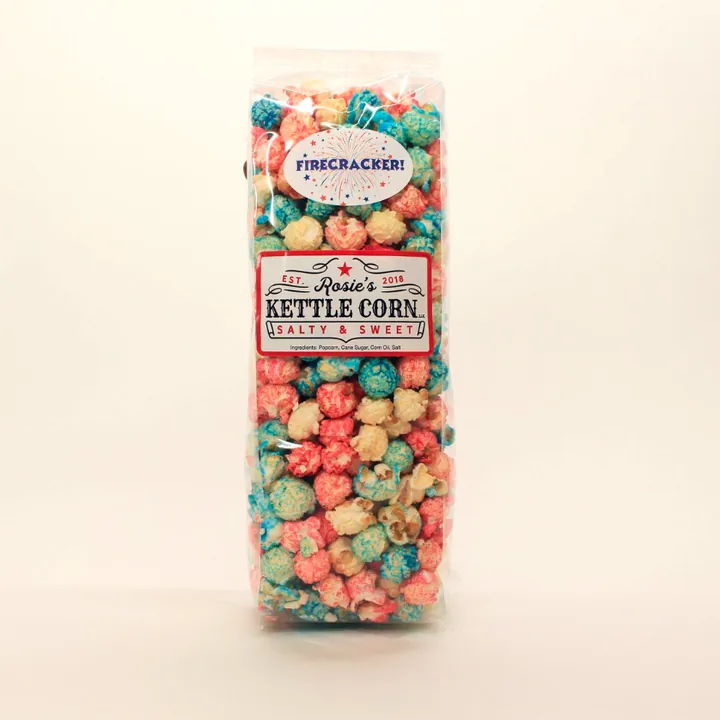
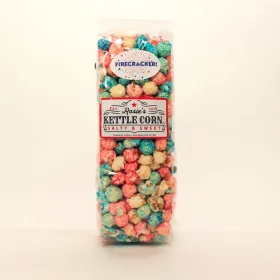
LocalCart’s makers fit that pattern. Rosie’s Kettle Corn in Coatesville, Pennsylvania still pops on site at festivals, markets and events in Chester County, with popcorn from Lancaster County. Pasta Lab in Philadelphia labels its pasta as made with local grains and ingredients from the Mid-Atlantic region. LocalCart gives them a storefront beyond the weekend table. Its older post shows how to discover small-batch goods nationwide.
At the marketAsk where the main ingredient was grown, not only where the jar was filled. A maker who can name the farm, as Vesta Kitchen does for the peppers in Hill Creek Hot Sauce, is a maker worth coming back to.
Mid-Atlantic food & southern food staples
Where the crab-shack region meets the biscuit belt
What counts as "mid atlantic food" depends on who draws the map. Many of LocalCart’s makers sit in Virginia, Maryland and Pennsylvania, and in Virginia the region starts to overlap with southern food: the muscadine’s native range reaches north into Delaware, and country ham is a Virginia craft.
Of the southern food staples on this list, muscadine jelly is on LocalCart from a Virginia farm market. Sorghum syrup and country ham are not.
Regional specialties from Maryland & Virginia
Crab spice, layer cake & a bag of jollof
Maryland has two regional specialties with paperwork. Smith Island Cake, traditionally "eight to ten layers of yellow cake" with chocolate frosting, became the state dessert effective October 1, 2008. Old Bay began as Gustav Brunn’s "Delicious Brand Shrimp and Crab Seasoning" at his Baltimore Spice Company and was named for the Old Bay Line steamship between Baltimore and Norfolk, Preservation Maryland wrote in 2017. McCormick bought the recipe in 1990.
Maryland’s pantry today is wider than crab spice. Amac in Montgomery Village sells a Jollof rice premix developed by Dr. Kwamena Atta Cudjoe, a Maryland-based Ghanaian, that cooks in 35 minutes. Caulfield Provision Company in Potomac makes cooking sauces, McCutcheon’s in Frederick sells the molasses above, and across the river Loudounberry sells jams, jellies, salsas and smoked pickled eggs.

How to order regional food by mail
Read the label, then read the cart
Before you order, check the label against the rule that protects the name.
| Food | Home region | What to check |
|---|---|---|
| Muscadine jelly | Southeast | Muscadine or scuppernong juice in the ingredients |
| Huckleberry jelly | Idaho and the West | Where the berries were picked, if it matters to you |
| Smithfield ham | Smithfield, VA | "Genuine Smithfield" means aged 6 months or more in town |
| Maple syrup | Northern states, Canada | Grade A plus a color: Golden, Amber, Dark or Very Dark |
| Green chile | New Mexico | "NOT GROWN IN NEW MEXICO" means it is not |
| Wild rice | Minnesota | "Paddy" or "cultivated" versus "hand harvested" |
| Sorghum syrup | Kentucky and neighbors | Sorghum syrup, sometimes miscalled "sorghum molasses" |
On LocalCart, start with Loudounberry preserves from Virginia or Caulfield sauces from Potomac. Each maker ships its own products, so a cart with items from two makers shows two shipping charges at checkout, with rates calculated for your address. Guest checkout works, and payment goes through Stripe or PayPal.
Before you check out0 of 4 done
Sources
- Wikipedia, Cuisine of the United States
- University of Florida IFAS Extension, The Muscadine Grape (HS100)
- North Carolina General Assembly, Session Law 2001-488
- William G. Pomeroy Foundation, Shoofly Pie historic marker, 2025
- Jeff Z. Klein, Buffalo Toronto Public Media, The night they invented chicken wings
- Shane K. Bernard, 64 Parishes, Tabasco sauce
- Idaho Code 67-4510, State fruit
- University of Idaho Extension, Growing Western Huckleberries, 1999
- Code of Virginia 3.2-5419, Genuine Smithfield hams
- USDA AMS, Standards for Grades of Maple Syrup, Federal Register, 2015
- New Mexico Department of Agriculture, Chile Advertising Act FAQ
- Minnesota Statutes 30.49, Wild rice labeling
- University of Kentucky Center for Crop Diversity, Sweet Sorghum for Syrup
- USDA ERS, 2022 Census of Agriculture local food sales, 2024
- Maryland Manual, State dessert: Smith Island Cake
- Preservation Maryland, History of Old Bay, 2017
Regional food FAQs
Frequently asked questions
What does regional food mean?
It means a food tied to a particular place by its ingredients, its history or a law that protects its name. Wild rice labeling in Minnesota and the genuine Smithfield ham rule in Virginia are two examples written into state code.
Is there an official food by state list?
Not one list, but many states name official foods by law. Idaho made the huckleberry its state fruit in 2000, North Carolina chose the scuppernong grape in 2001 and Maryland made Smith Island Cake its state dessert in 2008.
What are some classic southern foods you can order online?
Jarred and bottled ones travel best, such as muscadine jelly, sorghum syrup and pepper sauce. On LocalCart, Loudounberry sells a muscadine jelly.
Can regional food be shipped cold?
Not through LocalCart, which lists no refrigerated or insulated shipping. Labels such as "Refrigerate After Opening" on its jars refer to storage at home.
Is sorghum syrup the same as molasses?
No. Sorghum syrup is the boiled-down juice of sorghum stalks, and the University of Kentucky calls the name "sorghum molasses" incorrect. Buy it by the word sorghum on the label.
Local food & small-batch shopping guides
More from the LocalCart blog