Cart is empty


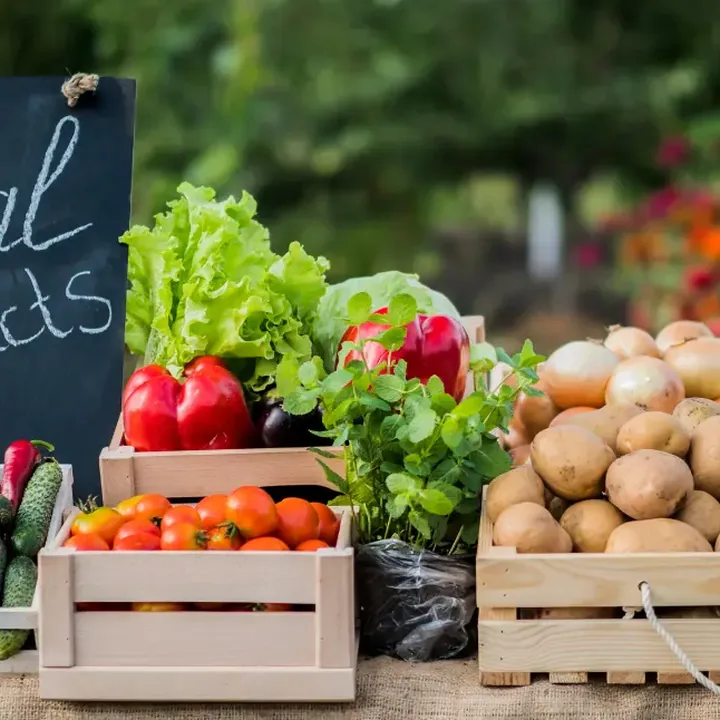
Start with the stores that buy from farms and makers on purpose: food co-ops, independent grocers, farm markets with a grocery corner, and the occasional supermarket with a real local section. Then confirm what you find by reading the back label, because the word "local" on a shelf tag can mean almost anything.
Farms do sell to stores, at real scale. In USDA's 2020 Local Food Marketing Practices Survey (published 2022), 24,137 farms sold food directly to retailers for $1.9 billion. USDA's retailer group covers supermarkets, supercenters, independent grocery stores and food co-ops, and also restaurants and caterers, so not all of it reached a shelf. The trick is finding the ones near you that stock jars and bottles, not only produce.
How to find local grocery stores
Four kinds of store do most of the stocking
If you are wondering how to find local grocery stores that carry small makers, sort the options by type first. Each type buys differently, so each one hides its local goods in a different place.
What you need
-
Your zip code and 20 minutesEnough for one pass through the directories in step 2.
-
A phone cameraPhotograph back labels so you can look up the maker later.
-
A short list of staplesJam, hot sauce, pasta, a spice blend. Hunt for the things you already buy.
-
Three questions for the staffWritten out below, so you are not improvising at the register.
| Store type | Where small makers show up | How to find one |
|---|---|---|
| Food co-op | Often a shelf tag or end cap that names the maker and town. Co-ops are owned by their members, who can ask the store to carry a maker. | National Co+op Grocers says it represents 169 food co-ops running 241 stores in 40 states. Its store finder maps them. |
| Independent grocer or specialty grocery store | Near the register, in a "local" bay, or mixed into the regular aisles with a small sign. | Search your town plus "independent grocer", "specialty foods" or "market". Owner-run stores answer the phone. |
| On-farm market or farm store | Shelves of jams, sauces, honey and baked goods beside the produce, often from neighboring farms. | The USDA on-farm market directory, covered in step 2. |
| Supermarket with a local program | A short run of regional brands, sometimes under a state logo. | Ask customer service which items are local and who decides. |
A small business grocery is usually your best bet, for a plain reason: the person ordering can say yes to a maker who walks in with a case of jars. In a chain, that decision often sits with a regional buyer who never sees the maker.
Most of what farms sell to local grocery stores is fresh. In the same USDA survey, 62 percent of farm sales to retailers were fresh foods. The other 38 percent was processed or value-added food, a group that takes in bottled milk, cheese, meat and wine as well as jams. Expect a shelf of jars, not an aisle.
Ask the farm, not the store.When you find a farm or maker you like, ask them which stores carry their products. Makers know exactly where their jars are. A store clerk may not.
What small batch food looks like on a shelf
The back label tells you more than the shelf sign
Learn the signs before you go hunting, so you can tell small batch food from a big brand dressed in kraft paper. Federal law gives you one strong clue for free: under 21 CFR 101.5, a packaged food label must name the manufacturer, packer or distributor with a place of business. If the company named did not make the food, the name has to be qualified with wording like "Manufactured for" or "Distributed by."
So a jar that names a maker and a town, with no "distributed by" in front of it, is naming the business that made or packed it. That one line often separates the jars of local makers from store brands on the same shelf.
| On the label | What it tells you | Real example |
|---|---|---|
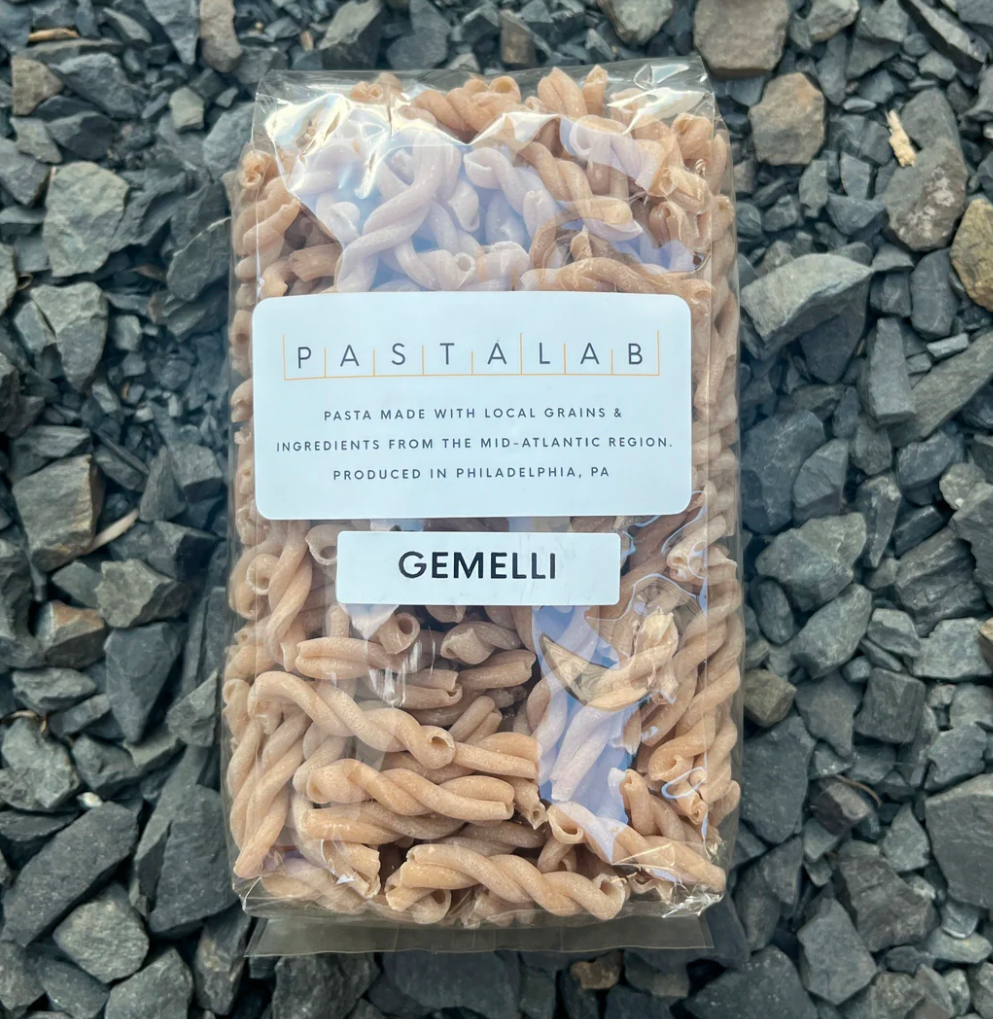
| A maker name and town, no qualifier | The named business made or packed it. | Pasta Lab bags read "Produced in Philadelphia, PA." |
| A named farm or region for an ingredient | The maker knows where its raw ingredients come from. | Vesta Kitchen's Hill Creek Hot Sauce uses peppers grown at Hill Creek Farm in Chester County, PA. |
| "Manufactured for" or "Distributed by" | Someone else produced it. That can still be a small co-packer, so ask. | Common on store brands. |
| No Nutrition Facts panel | Possibly a low-volume exemption. FDA allows it for firms averaging under 100 full-time equivalent employees that sell under 100,000 units of that product in the US in 12 months, with an annual notice, and not for products making nutrition claims. | FDA exemption page |
| A home-kitchen statement | A cottage food business made it. Rules vary by state. | Maryland requires "Made by a cottage food business that is not subject to Maryland's food safety regulations." |
| A state brand logo | The maker joined a state agriculture department program with its own eligibility rules. | Virginia's Finest, PA Preferred |
Maryland goes further. Under Maryland Health-General 21-330.1, a cottage food product sold in a retail food store must also list the business's phone number, email address and the date it was made. Rules vary by state, so check your state agriculture or health department before reading much into a missing statement.
Watch the words "local" and "artisan" with more suspicion. Neither has a federal legal definition on a food label. USDA's Economic Research Service wrote in 2010 that there is no consensus on how far "local" reaches in miles, and the 2008 Farm Bill definition quoted by the National Agricultural Library (moved less than 400 miles, or sold in the state where it was produced) is a definition in farm law, not a labeling rule. A store can put a "local" sign over anything it chooses.
State brand programs are firmer ground. Virginia's agriculture department says only Virginia products that meet or exceed its quality standards are eligible for the Virginia's Finest mark. Pennsylvania runs PA Preferred to help shoppers "find and buy locally grown and processed agricultural products." Other states have their own logos, worth learning before you shop.

For more ways to meet the people behind the jars, LocalCart's guide on how to find local artisans covers markets and events, and its roundup of small batch food from makers around the country shows what a well-labeled jar looks like.
Shelf tags can drift.Stores reuse tags. If the tag says one farm and the jar says another, trust the jar.
Use a local food directory & independent grocers
Search the farms first, then follow them to the stores
A search for "local food near me" mixes restaurants, markets and farms with no way to tell which ones stock jars. A local food directory built by USDA is more specific, as long as you know what it covers and what it leaves out.
The USDA Local Food Portal, built through a cooperative agreement between USDA's Agricultural Marketing Service and Michigan State University, lists five kinds of business. On November 2, 2026 its home page showed these totals:
Agritourism13,574
Farmers markets7,187
On-farm markets4,707
CSAs2,008
Food hubs483
Source: usdalocalfoodportal.com, home page counts, checked November 2, 2026.
Notice what is missing: grocery stores. The portal will not list your co-op. Use it for two things instead. First, the on-farm market directory, which the portal defines as a single farm selling to customers on or next to its property, with most products grown there or on neighboring farms. Some of those farm stores also stock jams, sauces or baked goods, their own or a neighbor's, so call before you drive. Second, the food hub directory. A food hub, in the portal's definition, aggregates and markets source-identified food from many producers to meet "wholesale, retail, and institutional demand." Call one and ask which stores it supplies. That list can be the best map of local shelves in your area.
Then go and talk to independent grocers in person. At an owner-run store, the person behind the counter may be the one who placed the order, and a specialty grocery store that stocks cheese and charcuterie may have a bay of regional preserves and hot sauces. Bring your questions:
Questions to ask an independent grocer0 of 5 done
The last question pays off on every later visit. Once you know whether a store marks local items with a colored tag, a state logo or the farm's name, you can scan an aisle in seconds.
Buy local food online when stores are far
When the nearest co-op is an hour away
Plenty of people live nowhere near a co-op or a farm store with a pantry shelf. For them, the practical way to buy local food from small makers is to have it shipped. It is still a small channel. USDA's 2020 survey counted $312 million in farm food sold to consumers through online markets, against $1.23 billion through on-farm stores and stands.
LocalCart is one way to do it. It is an online marketplace where independent small-batch makers list their own products, and those makers are based in Virginia, Maryland, Pennsylvania, New Jersey, Ohio and California. LocalCart's maker catalog sorts the listings by category, every product page names its vendor, and each maker has a storefront page with their story.
Some of those makers run the kind of store this guide has been describing. Loudounberry Farm & Garden, which sells its Famous Jams on LocalCart, says its mission is to give Loudoun County, Virginia residents and visitors "quality locally sourced, grocery items, produce and farm and garden supplies." If you live in Loudoun, go in person. If you live in Ohio, the jam can come to you.


Know how it works before you order, because it is different from store shopping. Each maker ships its own products, so a cart with items from two makers shows two shipping charges at checkout, with rates calculated for your address. Checkout takes addresses in the United States and the US Virgin Islands, though the Terms warn that shipping may not be available everywhere. Any shipping times shown are estimates, not guarantees. There is no local delivery, and food is final sale, so if something goes wrong you contact the maker or LocalCart at info@localcart.net. The trade-off is plain: a store lets you see the jar and skip shipping, while buying online reaches makers no store near you carries.
LocalCart is run from Harpers Ferry, West Virginia, by what it calls "a team of small-town, rural entrepreneurs." LocalCart's brand story explains its plan to start with a regional focus and grow toward tastes "from coast to coast."
Browse jams, sauces and pantry goods from independent makers in six states.
Shop the catalogSources
- USDA NASS, Direct Farm Sales of Food: Results from the 2020 Local Food Marketing Practices Survey, 2022
- National Co+op Grocers, About us, checked 2026
- Co+op, Store finder
- eCFR, 21 CFR 101.5, Name and place of business of manufacturer, packer, or distributor
- FDA, Small Business Nutrition Labeling Exemption, 2026
- Maryland Code, Health-General 21-330.1, Cottage food businesses, 2026
- USDA ERS, Local Food Systems: Concepts, Impacts, and Issues (ERR-97), 2010
- USDA National Agricultural Library, What makes a food local?
- Virginia Department of Agriculture and Consumer Services, Virginia's Finest, About us
- Pennsylvania Department of Agriculture, PA Preferred
- USDA AMS and Michigan State University, USDA Local Food Directories, checked November 2, 2026
- USDA Local Food Directories, Definitions
Local grocery store FAQs
Frequently asked questions
Is a grocery store the same as a supermarket?
In everyday speech, mostly yes. "Supermarket" usually means a large self-service chain store, while "grocery store" covers everything from a corner market to a co-op. USDA's local food survey names supermarkets, supercenters, independent grocery stores and food co-ops as different kinds of retailer, and the smaller formats are where small makers usually land.
Does "local" on a food label have a legal meaning?
No federal labeling definition exists. The 2008 Farm Bill defined it in farm law as under 400 miles or within the same state, but stores and brands can use "local" their own way. Look for a maker name and town on the label, or a state brand logo, instead.
How can I tell if a jar was made by a small maker?
Read the name and address on the back. If it says "Distributed by" or "Manufactured for", the named company did not make it. A maker name and town with no qualifier points to the business that made it, and a named farm for an ingredient or a cottage food statement points to a small one.
Can I ask my grocery store to carry a maker I like?
Yes, and independent stores are the most likely to listen. Give the buyer the maker's name, website and a product you would buy regularly. Then tell the maker you asked, so they can follow up.
Why do some small-batch foods have no Nutrition Facts panel?
FDA lets low-volume products skip it if the company averages fewer than 100 full-time equivalent employees, sells fewer than 100,000 units of that product a year and files an annual notice. Products that make nutrition claims do not qualify. A separate exemption, with no notice, covers very small retailers.
Does LocalCart deliver groceries locally?
No. LocalCart is an online marketplace where each maker ships its own orders, with rates shown at checkout for your address. Checkout accepts addresses in the US and the US Virgin Islands, and any shipping times shown are estimates, not guarantees.
Local food & small-batch shopping guides
More from the LocalCart blog