Cart is empty


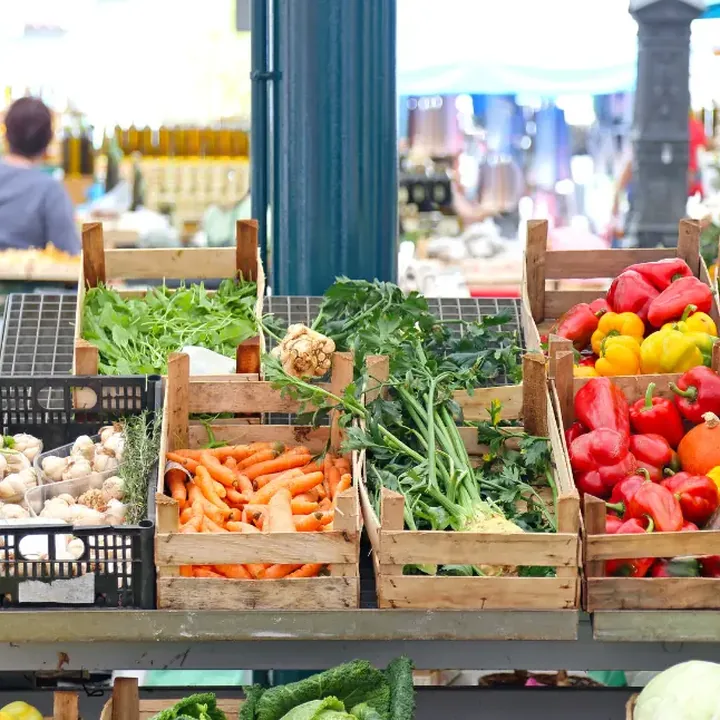
A food hub is a business or organization that gathers food from many local farms and sells it to buyers who need more than one farm can supply, keeping track of which farm grew what along the way. That is the plain version of the working definition USDA's Agricultural Marketing Service published in 2012.
Most hubs sell wholesale to institutions and grocers. A large minority also sell to households, often through online ordering with a pickup site or delivery day. This guide covers the models, the supply chain steps a hub runs, and how hub delivery compares with other ways local food reaches your door, including marketplaces like LocalCart, which is not a food hub.
Regional food hub models
One job, very different owners
1
Many farms in
A hub collects from dozens of growers. A 2011 survey of US hubs put the median at 40 suppliers.
2
Many buyers out
Schools, hospitals, grocers, restaurants and, for some hubs, households.
3
Farm names kept
Products stay source-identified, so the buyer knows which farm grew them.
4
Not a market stall
A market manager rents space to growers. A hub runs the supply chain itself.
So what is a food hub, in the words of the people who defined it? The National Food Hub Collaboration, a group whose partners included USDA's Agricultural Marketing Service and the Wallace Center, settled on this in the Regional Food Hub Resource Guide (April 2012):
A regional food hub is a business or organization that actively manages the aggregation, distribution, and marketing of source-identified food products primarily from local and regional producers to strengthen their ability to satisfy wholesale, retail, and institutional demand.
Barham et al., USDA Agricultural Marketing Service, 2012
The guide is clear that a hub is defined by what it does, not by its legal form. That is why the same word covers a farmer cooperative, a nonprofit, a private distributor and a publicly run market. Hubs are usually sorted two ways: by who owns them and by who they sell to.
| Model | Who it sells to | Share of US hubs (2011 list) | Count (2014 list) |
|---|---|---|---|
| Farm to business or institution | Grocers, restaurants, schools, hospitals, distributors | 42% | 87 of 302 |
| Farm to consumer | Households, through farm shares, online buying clubs, delivery or mobile markets | 36% | 119 of 302 |
| Hybrid | Both wholesale buyers and households | 22% | 96 of 302 |
The 2011 shares come from a working list of 168 hubs in the AMS guide. The 2014 counts come from AMS's list of 302 hubs as tabulated in the ERS report to Congress (2015). By ownership, that 2014 list was about 40% privately held businesses, almost 30% nonprofits and 20% cooperatives. By the ERS count, the number of hubs grew 288% between the 2006 to 2007 period and 2014.
Three examples from the 2012 guide show the range. The Intervale Food Hub in Burlington, Vermont, a 22-member farmer collaborative, sold through a farm share with more than 300 members and also sold wholesale to 12 restaurants and caterers, two schools and a hospital. The Oklahoma Food Cooperative ran an online buying club for households. Red Tomato, a nonprofit in Canton, Massachusetts, arranged aggregation, trucking and sales for 35 to 40 farms without ever physically handling the food, relying on farmers and contract truckers instead. Those details are as of 2012.
Is a farmers market a food hub? Usually not. The guide notes that most market managers do not aggregate or market product for their growers. Some do, though: the Santa Monica Farmers Markets also supplied produce to the local school district.
And if you came here wondering whether an online marketplace counts as a food hub, the short answer is no. LocalCart does not buy, collect, store or truck anything. Each maker lists and ships its own products, which puts it outside every model in the table above.
Viability checkAmong 20 hubs interviewed in early 2011 for the 2012 guide, those that called themselves economically viable reported median gross sales of $6 million a year and had operated a median of 9.5 years. Hubs not yet viable had median sales of $500,000 and five years of operation. A new hub may need outside support for years.
The local food supply chain
Five steps from field to buyer
A school district that wants local carrots does not want calls from 15 farms. It wants one invoice, one delivery window and carrots cut to spec. A regional food hub exists to bridge that gap, and it does it in a fairly predictable order.
- Plan. The hub works with growers on what to plant and how much. One example in the AMS guide, Local Food Hub, preordered crops from producers in November and December for the following season, using buyers' demand and price projections.
- Harvest & pack. Farms harvest and pack to the buyer's grade, size and food safety requirements. In the 2013 National Food Hub Survey, over 40% of hubs offered food safety training to their growers.
- Aggregation. Growers drop product at the hub's warehouse, or the hub picks it up on the farm. Work at the warehouse can include dry and cold storage, grading, packing, labeling and light processing such as trimming, cutting and freezing.
- Food distribution. Hub trucks, or contracted ones, deliver to stores and kitchens. Some hubs partner with established distributors instead of running routes themselves.
- Sale with the farm name attached. The hub sells under the farm's name or a shared regional brand, so the product keeps its source identity all the way to the buyer.
Aggregation is the step that matters most for small farms. One small farm's weekly harvest of greens cannot fill a hospital's order. Pooled with its neighbors' harvests through a hub, it can. That is also why hubs lean toward smaller growers: in the 2013 National Food Hub Survey, 76% of hubs worked exclusively or mostly with farmers selling under $500,000 a year, according to the ERS report.
This middle channel now outsells every direct-to-consumer route combined. In 2020, farms sold $4.1 billion of food through institutions and intermediate markets such as wholesalers, distributors and processors, 46% of all direct farm food sales, compared with $2.9 billion sold straight to consumers (USDA NASS, 2020 Local Food Marketing Practices Survey). By the 2022 Census of Agriculture, sales to retailers, institutions and intermediaries including food hubs had reached $14.2 billion, with 60,332 farms selling that way (ERS, 2024).
- Aggregation
- Pooling product from many farms into lots large enough for a wholesale buyer.
- Source-identified
- Product that keeps the name and location of the farm that grew it all the way to the buyer.
- Intermediated sale
- A local sale that passes through a business (a hub, grocer or distributor) before reaching the eater.
- Cold chain
- Keeping perishable food cold without a break from harvest to sale.
- Local
- No single legal definition. USDA's local food survey uses less than 400 miles or within the state where the food was produced.
Labels to read"Local" and "artisan" have no federal legal definition. If a hub or store uses the word, the useful follow-up is which farm, and where.
From farm to door with local online grocery
Four routes a local order can take to your porch
Ordering local food online sounds like one thing, but behind the checkout button sit very different setups. The local food supply chain behind a hub's delivery box looks nothing like the one behind a parcel from a single maker. Knowing which one you are using tells you what you can buy, how it stays cold and what shipping will cost.
| Route | Who holds the food | What it carries | How it reaches you |
|---|---|---|---|
| Hub-run online store or buying club | The hub, at its warehouse | Fresh produce, meat, dairy, eggs from many farms | Hub delivery route or pickup site, usually on set days |
| Multi-farm farm share | The hub or lead farm | A box of what is in season | Weekly pickup or delivery for the season |
| Single-farm online store | The farm | That farm's own products | Farm pickup, market pickup or the farm's delivery |
| Online marketplace such as LocalCart | Each maker | Shelf-stable jars, sauces, spices, pantry goods | A separate parcel from each maker |
Online selling is still a small slice of farm-direct sales. Of the $2.9 billion farms sold straight to consumers in 2020, $312 million moved through online markets, against $1.23 billion through on-farm stores and stands, NASS found.
Local food logistics is the hard part of every route. A hub delivering fresh food has to keep a cold chain across many small stops, which pushes many hubs toward set delivery days and shared pickup sites. A marketplace of shelf-stable goods sidesteps refrigeration but trades it for parcel shipping from several origins.
To find a hub that sells to households, search the USDA directory of regional hubs, which sits inside AMS's Local Food Directories alongside farmers markets, farm shares and on-farm markets. The food hub directory is self-listed: managers create accounts and update their own entries, so call or check the hub's site before you count on a delivery day.
Questions to ask a food hub before you order0 of 6 done
How LocalCart works by comparison. LocalCart is an online marketplace, not a hub. Its terms describe it as a platform where you buy from third-party sellers, with LocalCart not directly involved in the transaction. Each maker ships its own products, so a cart with items from two makers shows two shipping charges at checkout, with rates calculated for your address. There is no cold chain because there is nothing fresh: the catalog is preserves, sauces, spice blends and pantry goods from small makers in Virginia, Maryland, Pennsylvania and beyond.
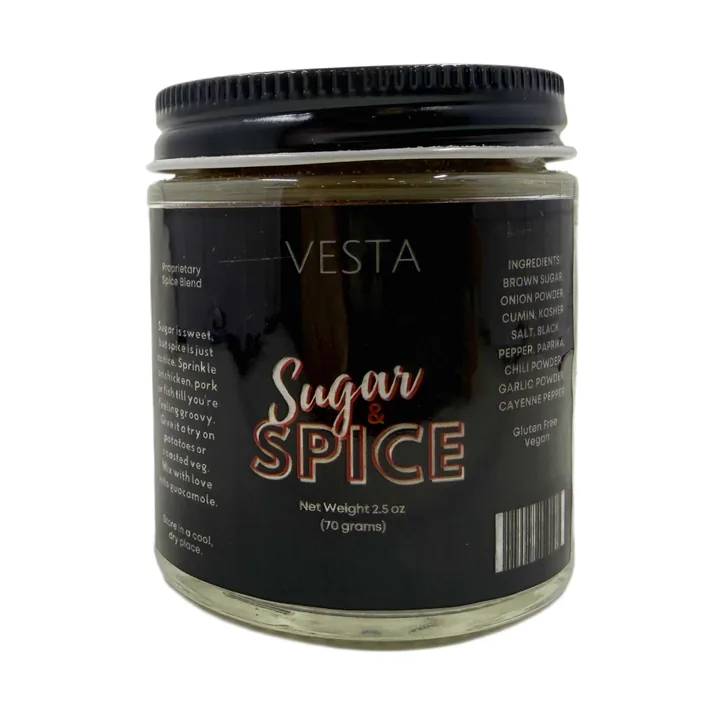
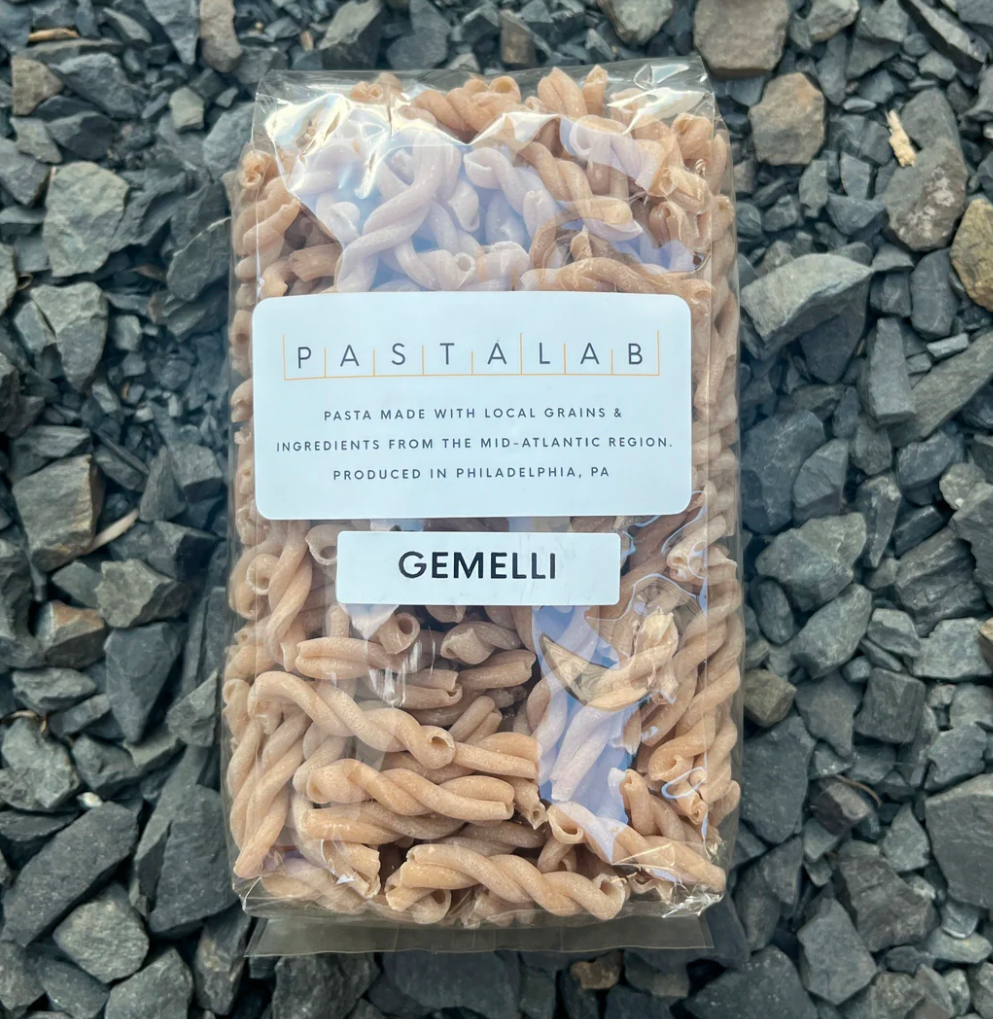
Some of those products still carry a farm-to-maker chain you can trace. Vesta Kitchen in Pottstown, PA, makes Yellow Submarine Hot Sauce from yellow peppers grown at Knee High Farm and Hill Creek Farm in Chester County, and finishes Tangled Up in Blue with butter and blue cheese from Birch Run Hills Farm. Pasta Lab in Philadelphia labels its pasta as made with local grains and ingredients from the Mid-Atlantic region.


LocalCart's own work is supported by a USDA Agricultural Marketing Service award under the Local Agricultural Market Program's Local Food Promotion Program (project no. 25LFPPWV1282). The views in this guide are LocalCart's, not USDA's.
Sources
- Barham et al., Regional Food Hub Resource Guide, USDA Agricultural Marketing Service, April 2012
- USDA ERS, Trends in U.S. Local and Regional Food Systems: A Report to Congress (AP-068), 2015
- USDA NASS, Direct Farm Sales of Food: Results from the 2020 Local Food Marketing Practices Survey, 2022
- USDA ERS, Chart of Note: Agricultural census shows strong growth in direct sales from farms and ranches, 2024
- USDA AMS, Local Food Directories
Food hub FAQs
Frequently asked questions
Is a food hub the same as a food bank?
No. A food bank collects and distributes food, much of it donated, to people facing hunger. A food hub buys from farms and sells the food on. Some hubs partner with hunger relief groups, as Detroit's Eastern Market did with Gleaners Community Food Bank on a food box program described in the 2012 AMS guide.
Can households buy from a food hub?
Often, yes. In the 2014 AMS list, 119 of 302 hubs sold farm to consumer and another 96 sold to both households and businesses. Expect farm to door delivery on set days or a pickup site, not on-demand service.
Is local online grocery the same as a food hub?
Not always. Some local online grocery services are hubs that gather food from many farms. Others are marketplaces where each seller ships its own goods, which is how LocalCart works. You can read more about LocalCart and why it started in LocalCart's brand story.
How do I find a food hub near me?
Start with the USDA Local Food Directories, which list food hubs alongside farmers markets and farm shares. Listings are entered by the businesses themselves, so confirm hours and delivery areas directly.
Why can food from a hub cost more than supermarket food?
Hubs are built to buy from small and midsized farms that are too small for standard wholesale chains, and many set out to get those farms a good price, using farm names, group brands and growing practices to command a premium, as the 2012 AMS guide describes. You are paying for a short, traceable chain.
Local food & small-batch shopping guides
More from the LocalCart blog