Cart is empty


A dry rub is a blend of salt, spices and often sugar pressed onto meat before cooking. A wet rub is the same idea turned into a paste with oil or mustard. A marinade is a thinner liquid, usually with acid, that the meat soaks in for hours.
The practical difference is depth. University of Florida Extension notes that a dry rub "only penetrates the surface," while a marinade can reach about a quarter inch into the cut, sometimes more with a lot of acid.
Marinade vs rub basics
Crust, cling or soak: three ways to season
Short answer
Use a dry rub for crust on fatty cuts. Use a wet rub when a rub will not stick. Marinate lean cuts.
None of the three flavors meat all the way through. For deeper flavor, UF Extension points to a brine or injection.
- Dry rub: dries the surface so a crust or bark can form
- Wet rub: a paste that holds spices on lean meat, fish and vegetables
- Marinade: adds moisture and acid to lean cuts, with a time limit
Dry rub
Salt, spices, often sugar
Wet rub
Rub plus oil, mustard or liquid
Marinade
Acid, oil, seasoning
A dry rub pulls moisture from the outside of the meat, which UF Extension says leads to crispier grilling and a crust. Because nothing wet sits between the meat and the heat, the surface browns fast. That crust is where most of a rub's flavor ends up.
A wet rub solves a sticking problem. UF Extension notes that dry rubs "do not always adhere well to dry cuts," and suggests a binder such as mayonnaise, mustard or oil. Mix a binder into the rub first and you have a paste. That is the whole dry rub vs wet rub distinction: same spices, different carrier.
The binder is there to hold spice in place. Without one, UF Extension warns, some spots on the cut can end up over-seasoned. Each common choice brings something slightly different:
| Binder | What it brings | Best with |
|---|---|---|
| Oil | A thin, neutral film that also helps lean surfaces brown | Chicken, fish, vegetables |
| Yellow or spiced mustard | Tang from vinegar and mustard, and a tacky layer that grabs coarse spices | Pork, ribs, chicken thighs |
| Mayonnaise | Oil and egg in a thick layer that clings to smooth surfaces | Chicken breast, fish fillets |
| A thin sauce | Its own seasoning, so cut back on salt in the rub | Pork chops, wings |
| Feature | Dry rub | Wet rub | Marinade |
|---|---|---|---|
| What it is | Dry blend of salt, spices, often sugar | Rub mixed into oil, mustard or another liquid | Liquid with acid, oil and seasonings |
| How deep it goes | Surface only | Surface only | Up to about 1/4 inch, more with more acid |
| Main job | Crust and bark | Even coating that stays put | Moisture, some tenderizing, flavor |
| Time before cooking | Minutes to a few hours | Minutes to a few hours | 15 minutes to 24 hours, by protein |
| Best on | Brisket, pork shoulder, marbled steak | Chicken, fish, vegetables | Chicken breast, pork loin, shrimp |
What salt & acid do to meat
Salt swells the fibers. Acid softens the surface.
Salt changes how meat holds water. In a classic 1983 Meat Science paper, Offer and Trinick watched myofibrils, the contractile strands inside muscle fibers, swell to about twice their original volume in salt solutions like those used in meat processing. Their hypothesis is that meat gains or loses water as those myofibrils swell or shrink, which is the idea behind brining a lean cut to keep it juicy.
Acid works differently. UF Extension says acid can break down proteins, so marinades need hours to work, but too long a soak can leave meat "soft and mushy." Utah State University Extension adds that over-marinating can also make meat tough.
BBQ rub & grilling seasoning by cook
Let the heat & the cut pick the method
The marinade vs rub choice gets easier once you know the cook. Wikipedia's seasoning rub background page notes that cooking with a spice rub is almost always done with dry heat, grilling most of all, with baking and pan roasting among the other options.
| Cook | Best method | Why |
|---|---|---|
| Low and slow smoke: brisket, pork shoulder, ribs | Dry rub, applied hours ahead | Fatty cuts need no added moisture, and a dry surface builds bark over a long cook |
| Hot grill: steaks, chops | Salt-forward dry rub, little or no sugar | Sugary rubs can char and taste bitter over high heat, per UF Extension |
| Lean poultry and pork loin | Marinade, or a wet rub with oil | Lean meat benefits from added oil and moisture |
| Fish and shrimp | Short marinade or wet rub | The marinating window for seafood is only 15 to 60 minutes |
| Vegetables | Wet rub or oil plus a dry blend | Oil helps spices stick and brown |
Sugar is the line to watch. Sugar goes into a spice rub for flavor and caramelization, which builds a dark crust over gentle heat. Over a hot fire, UF Extension says, rubs high in sugar "can char and taste bitter." Grill sweet rubs over medium heat, or start indirect and finish over the coals.
Marinating times by protein
Fish is quick. Beef & pork can go a day.
Utah State University Extension gives the marinating times UF Extension repeats: seafood 15 to 60 minutes, chicken 2 to 24 hours, and pork or steak up to 24 hours or longer for dense cuts. Plan on about half a cup of marinade per pound of meat, USU says. Red meat marinades often skip oil because the meat brings its own fat, while chicken and fish benefit from it. Pat the meat dry before it hits the grill, UF adds, because oil and sugar dripping into the fire cause flare-ups.
Prep & doneness by cook
The clock gets you close. A thermometer finishes the job.
| Cook | Season ahead | Safe internal temperature |
|---|---|---|
| Shrimp, fish fillets | Marinade 15 to 60 minutes | 145°F |
| Chicken pieces | Marinade 2 to 24 hours, or a dry rub 30 minutes to a few hours | 165°F |
| Pork chops, pork loin | Marinade up to 24 hours, or a dry rub | 145°F, then rest 3 minutes |
| Steaks | Salt-forward dry rub 30 minutes to a few hours ahead | 145°F, then rest 3 minutes |
| Burgers | Dry rub or wet rub on the patties | 160°F |
| Brisket, pork shoulder, ribs | Dry rub, minutes to hours ahead | 145°F is the safety floor. These cuts are cooked well past it until tender. |
The temperatures are USDA safe minimums as listed by University of Illinois Extension. Rest time counts: the meat keeps cooking for those 3 minutes after it leaves the grill.
Marinade safetyMarinate in the refrigerator, never on the counter. Use glass or plastic, not metal, since acid can react with it. If you want marinade for basting, set some aside before it touches raw meat. Utah State says marinade that has touched raw meat needs a rolling boil for one minute before you use it.
Local market food seasonings to try
Small-batch jars that cover rub, paste & marinade
A good bbq rub is mostly a ratio of salt, sugar and heat. Reading a small maker's label tells you which cooks it suits before you open the jar.
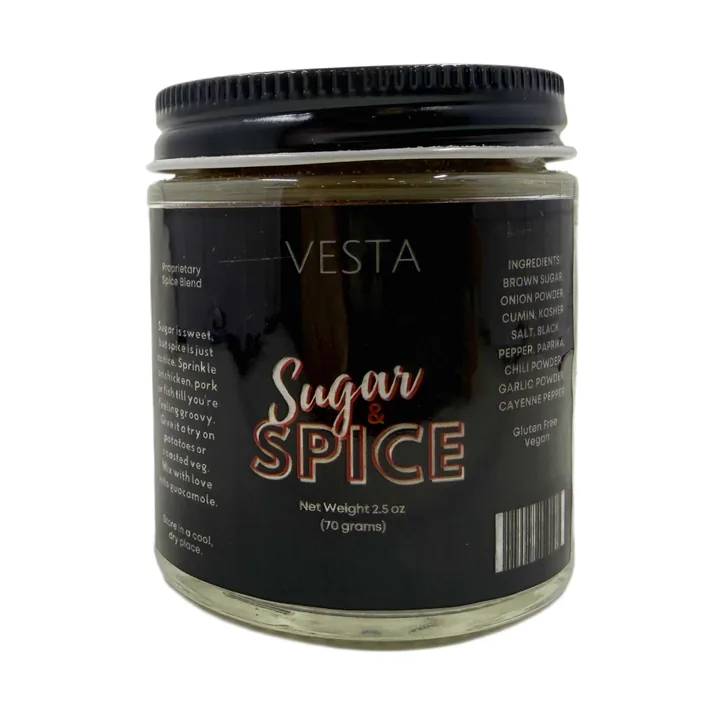
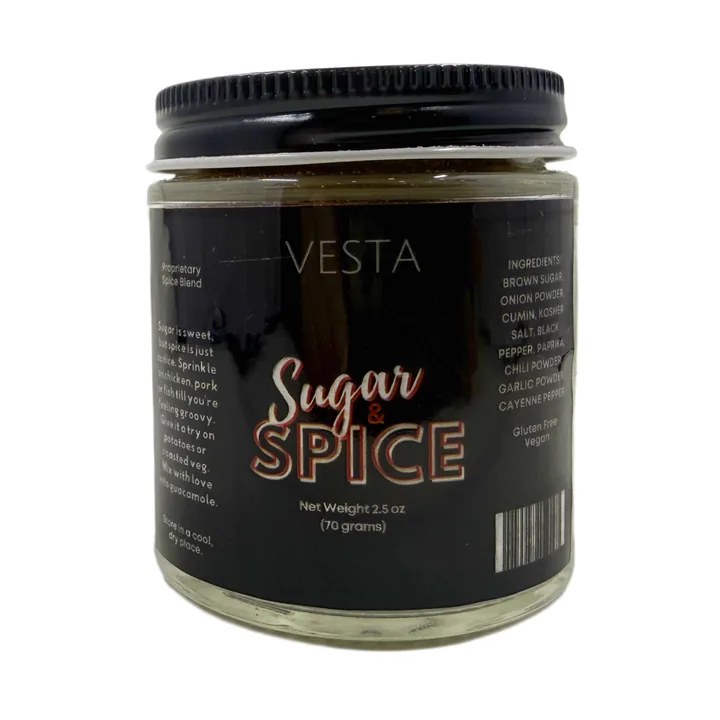
Vesta Kitchen in Pottstown, Pennsylvania, calls its Sugar & Spice blend "our signature spice rub" and suggests it for pork, chicken and grilled vegetables, for blackening fish for tacos, or for mixing into guacamole. The label lists brown sugar, onion powder, cumin, kosher salt, black pepper, paprika, chili powder, garlic powder and cayenne. It is a 2.5 oz jar for $10.00, labeled gluten free and vegan.
Brown sugar comes first on that list, and US labels must list ingredients by weight, largest first, so sugar is the biggest single ingredient. Treat it as a medium-heat grilling seasoning: good on chicken thighs over indirect heat, riskier on a steak seared over a roaring fire.

How to use dry rub
Dry surface, even coat, then rest
- Pat the meat dry with paper towels.
- Add a thin binder if the surface is very dry: oil, mustard or mayonnaise all work, per UF Extension.
- Sprinkle the rub from above so it lands evenly, then press it in.
- Rest it in the refrigerator for 30 minutes to a few hours.
- Cook over heat that suits the sugar level: medium for sweet rubs, hotter for salt-and-pepper blends.
That is the short answer to how to use dry rub. Do not skip the rest: UF Extension says 30 minutes to a few hours in the refrigerator is what lets the flavor develop.
Sauces that work as a wet rub
Mustard binds. A thin sauce marinates.
Mustard is the classic wet rub base, and Caulfield Provision Company's #60 Fiery Habanero Mustard Sauce brings its own heat. The habanero mustard sauce lists carrots, garlic, water, onion, distilled vinegar, habanero, honey, mustard powder, sea salt and natural gum, so it can work as a binder: brush it on pork or chicken and press a dry rub on top. The honey means the same medium-heat rule applies. Caulfield, a woman-owned family business in Potomac, Maryland, suggests it for egg salad, burgers and dipping pretzels, and calls it one of its top sellers.
For a true marinade, Caulfield's #68 Szechuan Style Red Pepper Sauce says on its own page that it "works equally well as a marinade." Its label starts with water, diced tomatoes, onion, cider vinegar and red jalapenos, and the maker describes the heat as subtle, with garlic and onion accents.


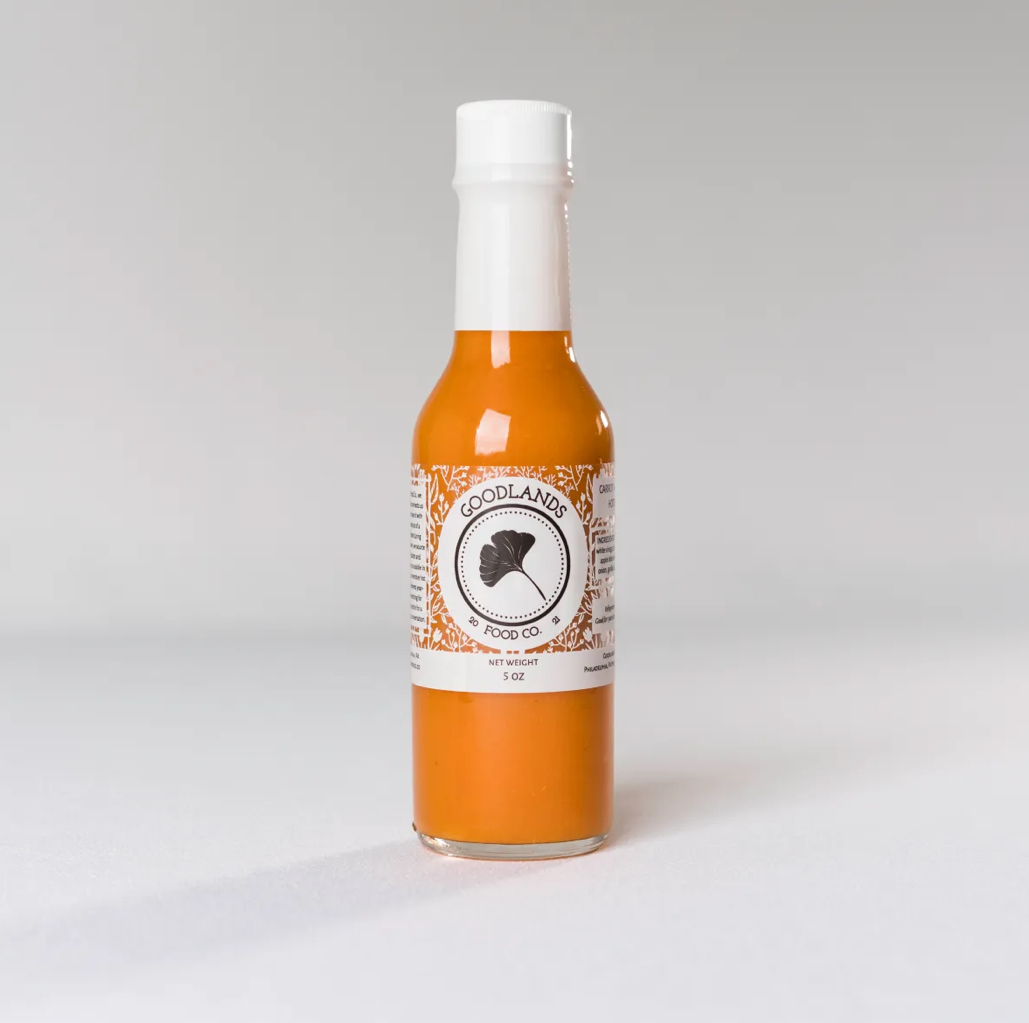
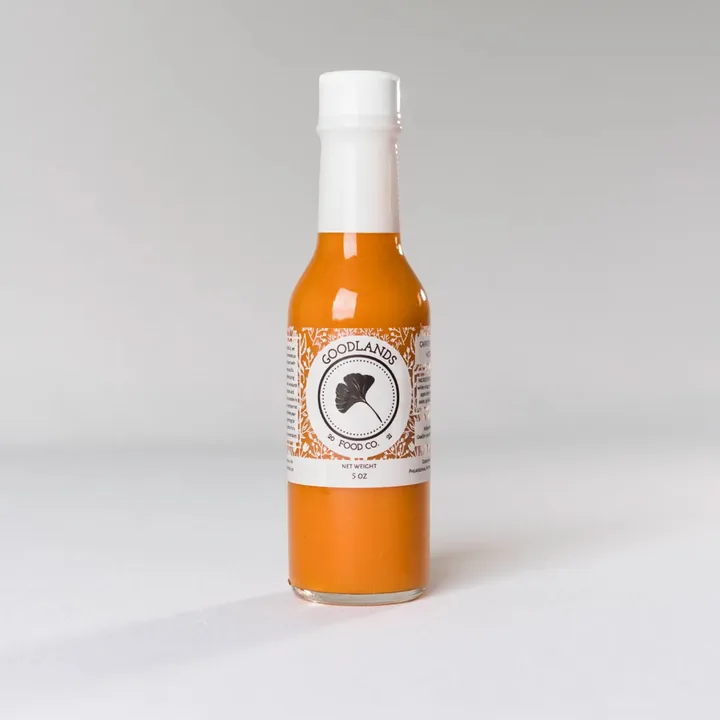
Goodlands Food Co. in New Jersey suggests its Carrot Habanero Hot Sauce as a base for buffalo sauce, a finishing glaze for dry-rubbed wings.
Build your own rub recipe
Spicy, salty, sweet & savory in balance
If you would rather write your own rub recipe, UF/IFAS Extension's 4-H tailgate series breaks a dry rub into four parts: spicy, salty, sweet and savory. The sugar you pick matters on the grill. White sugar will scorch at high temperatures, the publication notes, while turbinado has a higher burn point, which makes it the better sweetener for grilling.
| Part | Common picks | Example amount in the 4-H beef rub |
|---|---|---|
| Salty | Kosher salt, sea salt, seasoned salt | 1 tbsp kosher salt |
| Spicy | Black pepper, chili powder, paprika, cayenne | 1/2 tbsp black pepper, 1 tbsp smoked paprika |
| Sweet | Brown sugar, turbinado sugar | 1 tbsp light brown sugar |
| Savory | Garlic powder, onion powder, cumin, mustard powder, herbs | 1 tbsp garlic powder, 1/2 tbsp ground cumin |
The same publication matches the blend to the protein: pork likes sweet and smoky, beef stands up to bold flavors, chicken takes almost anything, and shrimp benefits from a touch of spice. Taste before you season the whole cut. UF Extension warns that a rub that is too salty or too spicy can overpower the meat.
Sources
- University of Florida IFAS Extension, Marinades Versus Dry Rubs (4H455), 2026
- Offer and Trinick, On the mechanism of water holding in meat: the swelling and shrinking of myofibrils, Meat Science, 1983
- Wikipedia, Spice rub
- Utah State University Extension, Tips on Marinating Meat, 2011
- University of Illinois Extension, Meat Temperatures
- eCFR, 21 CFR 101.4, Food: designation of ingredients
- University of Florida IFAS Extension, Florida 4-H Tailgate: Make Your Own Dry Rub (4H451), 2025
Dry rub vs wet rub FAQs
Frequently asked questions
What is the difference between dry rub and marinade for ribs?
A dry rub stays on the surface and dries it, which builds bark on fatty cuts like ribs over a long, slow cook. A marinade adds moisture and acid and suits lean cuts better. A common approach for ribs is a dry rub, with any sweet sauce brushed on near the end so its sugar does not burn.
What is barbecue rub made of?
Most barbecue rubs combine salt, sugar and ground spices. Vesta Kitchen's Sugar and Spice proprietary blend is a typical example: brown sugar, onion powder, cumin, kosher salt, black pepper, paprika, chili powder, garlic powder and cayenne.
How long should you leave a dry rub on?
From a few minutes to a few hours. UF Extension suggests 30 minutes to a few hours in the refrigerator so the flavor can develop. For deeper seasoning, use a brine or injection instead.
Can you turn a dry rub into a wet rub?
Yes. Stir in oil, water or another liquid until it forms a thick paste, or spread a binder such as mustard on the meat and press the dry rub onto it. The paste sticks better to lean meat, fish and vegetables.
Where can I buy small-batch local market food seasonings online?
LocalCart is a marketplace for local market food from independent makers, including spice blends from Vesta Kitchen in Pennsylvania and sauces from Caulfield Provision Company in Maryland. Each maker ships their own products, so a cart with items from two makers shows two shipping charges at checkout, with rates calculated for your address.
Local food & small-batch shopping guides
More from the LocalCart blog