Cart is empty


Sugar and heat set into one spread do more than sit on crackers. Spoon pepper jelly over cream cheese, simmer meatballs in it, brush it on chicken or pork in the last minutes of cooking, or whisk it into a salad dressing. The nine ways below run from no-cook appetizers to weeknight dinners.
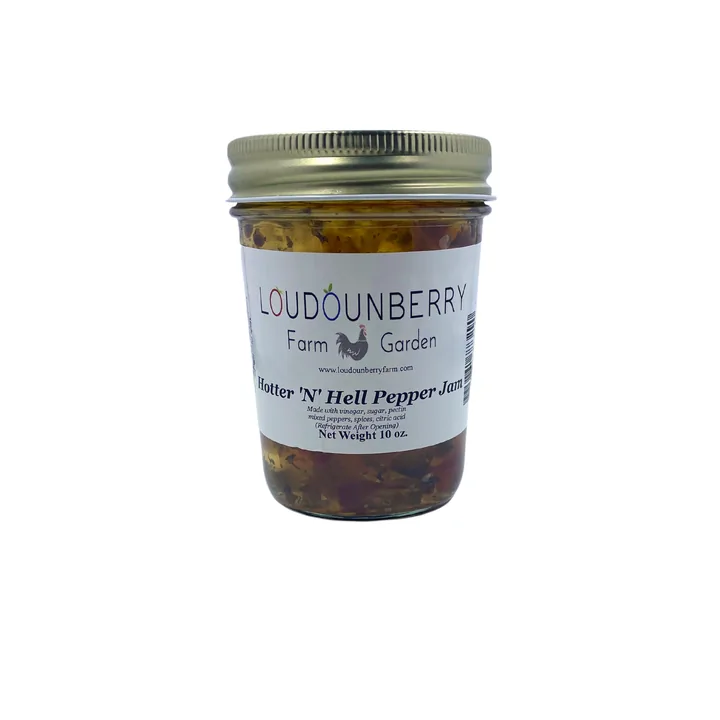
Most of them work with any pepper jelly or pepper jam. The jar used as the example here is Loudounberry Farm & Garden's Hotter 'N' Hell Pepper Jam ($4.99, 10 oz), whose label lists vinegar, sugar, pectin, mixed peppers, spices and citric acid.
Pepper jelly appetizer ideas
Four starters that need a jar & ten minutes
If you are wondering how to use pepper jelly for the first time, start here. A pepper jelly appetizer is usually a soft or salty partner plus a spoonful of jelly, so the heat lands on something mild. For background on the Southern condiment, Wikipedia traces commercial pepper jelly to Lake Jackson, Texas, in the late 1970s, likely made with jalapenos at first.
1. Pour it over a block of cream cheese
The classic cracker spread, ready in two minutes
Most people meet pepper jelly and cream cheese first, and Wikipedia lists the pair as the standard cracker spread. Set a cold block of cream cheese on a plate, spoon a few tablespoons of jelly over the top so it runs down the sides, and set out sturdy crackers that will not snap in the spread.
Cream cheese is perishable, so treat the plate like any party dish. The FDA's 2-hour rule says to discard perishables left at room temperature for more than 2 hours, or 1 hour above 90°F. Put out half the block and keep the rest cold.

2. Simmer a batch of pepper jelly meatballs
A sweet, sticky sauce from two jars
For pepper jelly meatballs you need a jar of jelly, a jar of chili sauce or ketchup and a pan of meatballs. Warm the jelly and sauce together until smooth, then turn the cooked meatballs in it and hold them in a slow cooker.
Check the meat, not the sauce. University of Illinois Extension lists USDA's safe minimum of 160°F for meatballs made from ground beef or pork and 165°F for ground poultry. Once they are cooked, the FDA says hot party food should stay at 140°F or warmer, and notes that some warmers only reach 110°F to 120°F, so check yours.
3. Top a wheel of warm brie
Melted cheese under a glossy, spicy lid
Bake a small wheel of brie until the center softens, then spoon pepper jelly over the top while it is warm. The jelly loosens in the heat and pools at the edges. Serve it with sliced baguette or apple wedges, which stand up to the gooey cheese better than thin crackers.
4. Set the jar on a cheese board
One spoonful of heat beside the sharp & the salty
On a board, pepper jelly plays the role a fig jam or honey usually plays, with heat added. It sits well beside aged cheddar, salty cured meats and plain crackers. Give it its own small bowl and spoon so guests can control how much heat they take.
Add a second, milder jar for guests who skip spice. Loudounberry's Huckleberry Jelly ($5.99) lists only huckleberry juice, sugar, pectin and citric acid.
Pepper jelly glaze for chicken & pork
Brush it on late so the sugar never burns
A pepper jelly glaze is the jar melted down, sometimes thinned with a splash of vinegar or water. Timing is the only trick. Sugar is the second ingredient on Loudounberry's label, and UF/IFAS Extension's 4-H grilling guide notes that white sugar will scorch at high temperatures. Cook the meat most of the way, then brush on the glaze for the last few minutes.
5. Glaze chicken thighs or wings
A sticky finish for a sheet pan of chicken
Of the dinners here, pepper jelly chicken is the easiest. Roast or grill seasoned thighs or wings until they are nearly done, warm a few tablespoons of jelly in a small pan until it pours, then brush it on and return the chicken to the heat until the glaze bubbles and sets.
Use a thermometer. University of Illinois Extension's chart lists 165°F for all poultry, dark meat included. Keep a separate brush or spoon for the glaze so it never touches raw chicken.
6. Finish pork chops or a tenderloin
Pork takes sweet heat better than almost anything
Sear pork chops or roast a tenderloin, then glaze in the final minutes the same way. Pan juices left after searing can go into the jelly as it melts, which turns the glaze into a quick pan sauce.
The safe minimum for whole cuts of pork is 145°F followed by a rest of at least 3 minutes, per the same Illinois Extension chart. Ground pork needs 160°F.
| Dish | When to glaze | Safe internal temperature |
|---|---|---|
| Chicken thighs, wings, drumsticks | Last 5 to 10 minutes | 165°F |
| Pork chops, pork tenderloin | Last few minutes, then rest | 145°F plus a 3 minute rest |
| Meatballs (beef or pork) | After cooking, in the sauce | 160°F |
| Meatballs (turkey or chicken) | After cooking, in the sauce | 165°F |
Pepper jelly recipes beyond the cheese board
Three everyday uses for the jar in the fridge door
Once a jar is open, it has about a month of best quality in the refrigerator (more on that below), so these pepper jelly recipes are about using it up. Most pepper jelly uses fall into three groups: dressings, sandwiches and roasted vegetables.
7. Whisk it into a vinaigrette
Jelly replaces the honey & the chili flakes at once
Melt a spoonful of jelly in a little warm vinegar, then whisk in oil at the usual three parts oil to one part vinegar, plus salt. It suits bitter greens, a slaw or a cold rice salad.
8. Spread it on a grilled cheese or turkey sandwich
A thin layer is enough to wake up leftovers
Wikipedia notes that pepper jelly can go in sandwiches, and it is at its best in a grilled cheese with sharp cheddar or on leftover roast turkey. Spread it thin on the inside of the bread, not the outside, or the sugar will darken in the pan before the cheese melts.
9. Toss it with roasted carrots or Brussels sprouts
A side dish glaze in the last two minutes
Roast carrots or halved Brussels sprouts until browned and tender, then toss them in a spoonful of melted jelly right on the hot pan. The vegetables carry the glaze without a separate sauce.
The same trick works with other jars from Loudounberry's range of small-batch jams & jellies. Its moonshine jelly ($4.99) is a clear, pale jelly whose label lists alcohol first, then sugar, pectin and citric acid, so skip it for anyone who avoids alcohol.

Hot pepper jelly vs pepper jam from a local farm grocery store
Clear & smooth, or flecked with pepper
The names follow the same rule as fruit spreads. The National Center for Home Food Preservation says jellies are usually made by cooking fruit juice with sugar, while jams are made by cooking crushed or chopped fruit. So a hot pepper jelly is typically strained or smooth, and a pepper jam keeps visible pieces of pepper in the set.
Neither name is legally fixed for peppers. The federal standard for jams and preserves, 21 CFR 150.160, lists only fruits, so a pepper spread is a nonstandardized food and its maker picks the name. The ingredient list is your best guide.
| Hot pepper jelly | Pepper jam | |
|---|---|---|
| Starts from | Strained liquid or finely minced pepper | Chopped pepper pieces |
| Looks | Clear or translucent | Flecked with visible pepper |
| Melts into | A smooth, clear glaze | A glaze with bits of pepper |
| Best for | Vinaigrettes, glossy glazes | Cream cheese, brie, sandwiches |
Loudounberry sells a pepper jam rather than a jelly. You can see the pepper pieces in the golden set of its Hotter 'N' Hell jar, and the name promises heat, but the label does not say which peppers go in or how hot they are. Start with a small spoonful.
Buying from a local farm grocery store has one advantage over the supermarket aisle: you can ask. Loudounberry Farm & Garden is a farm market in Loudoun County, Virginia, and its storefront lists locally sourced grocery items, farm produce and garden supplies. On LocalCart you can order Loudounberry's pepper jam without the drive, and the other Loudounberry jars ship in the same order, with one shipping charge for that maker. For shops near you, LocalCart's guide to finding farm makers near you covers markets, farm tours and community groups.
Heat checkTaste the jar on a plain cracker before you glaze a whole pan. The label gives no heat rating, and a glaze you cook down gets stronger as it thickens.
Sources
- Wikipedia, Pepper jelly
- US Food and Drug Administration, Serving Up Safe Buffets
- University of Illinois Extension, Meat temperatures
- University of Florida IFAS Extension, Florida 4-H Tailgate: Make Your Own Dry Rub (4H451)
- National Center for Home Food Preservation, Types of jellied products
- 21 CFR 150.160, Fruit preserves and jams (Cornell LII)
- National Center for Home Food Preservation, Storing home canned jams and jellies
Pepper jelly FAQs
Frequently asked questions
What do you eat pepper jelly with?
Cream cheese and crackers is the classic. It also goes with brie, aged cheddar, cured meats, chicken, pork, meatballs and roasted vegetables, and it can sweeten a vinaigrette or a grilled cheese.
Does pepper jelly need refrigeration after opening?
Yes. Loudounberry's jars say Refrigerate After Opening, and the National Center for Home Food Preservation says opened home-canned full-sugar jams and jellies are best stored for 1 month in the refrigerator at 40°F or lower. Throw the jar out if you see mold or smell a yeasty or alcohol odor.
Is pepper jelly very spicy?
Usually not very. Most pepper jelly is sweet first, and Wikipedia notes the common recipe pairs jalapenos with bell peppers. A jar made with hotter peppers can be much stronger, so taste a little before serving it to a crowd.
What crackers go best with pepper jelly?
Plain, sturdy crackers such as water crackers or butter crackers, which hold a layer of cream cheese without breaking. Flavored crackers compete with the jelly.
Can you cook with pepper jelly?
Yes. It melts into a glaze for chicken and pork, a sauce for meatballs and a coating for roasted vegetables. Add it near the end of cooking, because the sugar can scorch over high heat.
Local food & small-batch shopping guides
More from the LocalCart blog